

At ORY®, we believe you should know what’s in your products and why. This page lists the published research behind what we say about crocin and saffron extract. Each section starts with our claim, then tells you how well the research supports it, then lists the sources so you can read them yourself.
How to read this page Supported — backed by peer-reviewed research or official safety reviews. Supported, with caveats — the research points this way, but mostly from laboratory or animal studies, or at different strengths than ORY® uses. Limited evidence — little or no published research yet. We say so openly. |
1. General Description and Role
Claim: Crocin is the water-soluble carotenoid that gives saffron its golden color. In ORY® products, standardized saffron extract provides antioxidant support and helps skin look more radiant. |
Verification: Supported, with caveats. Lab studies show crocin protects skin cells from UV-induced oxidative stress and inflammation and reduces enzymes that break down collagen. Human evidence is limited. We found no CIR safety assessment for saffron extract.
Citations:
- Fagot, D., Pham, D. M., Laboureau, J., et al. (2018). Crocin, a natural molecule with potentially beneficial effects against skin ageing. International Journal of Cosmetic Science, 40(4), 388–400. https://doi.org/10.1111/ics.12472
- What it shows: Lab studies of crocin in skin cells.
- Alavizadeh, S. H., & Hosseinzadeh, H. (2014). Bioactivity assessment and toxicity of crocin: A comprehensive review. Food and Chemical Toxicology, 64, 65–80. https://pubmed.ncbi.nlm.nih.gov/24275090/
- What it shows: Review of crocin’s bioactivity and toxicity.
- Fagot, D., Pham, D. M., Laboureau, J., et al. (2018). Crocin, a natural molecule with potentially beneficial effects against skin ageing. International Journal of Cosmetic Science, 40(4), 388–400. https://doi.org/10.1111/ics.12472
2. Composition and Production
Claim: Crocin is extracted from dried saffron stigmas with water or alcohol, along with crocetin, safranal, and picrocrocin. ORY® requires graded saffron or standardized extract, because adulteration is common. |
Verification: Supported. Composition is well documented.
Citations:
- Alavizadeh, S. H., & Hosseinzadeh, H. (2014). Bioactivity assessment and toxicity of crocin: A comprehensive review. Food and Chemical Toxicology, 64, 65–80. https://pubmed.ncbi.nlm.nih.gov/24275090/
- What it shows: Describes crocin and related saffron compounds.
- Alavizadeh, S. H., & Hosseinzadeh, H. (2014). Bioactivity assessment and toxicity of crocin: A comprehensive review. Food and Chemical Toxicology, 64, 65–80. https://pubmed.ncbi.nlm.nih.gov/24275090/
3. Skin Type Suitability
Claim: Saffron extract suits most skin types, especially dull or uneven-looking skin. |
Verification: Limited evidence. We found no cosmetic clinical studies by skin type. Suitability is based on lab data and low use levels.
Citations:
- Fagot, D., Pham, D. M., Laboureau, J., et al. (2018). Crocin, a natural molecule with potentially beneficial effects against skin ageing. International Journal of Cosmetic Science, 40(4), 388–400. https://doi.org/10.1111/ics.12472
- What it shows: Lab evidence.
- Fagot, D., Pham, D. M., Laboureau, J., et al. (2018). Crocin, a natural molecule with potentially beneficial effects against skin ageing. International Journal of Cosmetic Science, 40(4), 388–400. https://doi.org/10.1111/ics.12472
4. Hair and Scalp Suitability
Claim: In haircare, saffron extract is used in scalp serums and hair oils for antioxidant support. |
Verification: Limited evidence. We found no clinical studies of saffron on the scalp or hair. ORY® haircare products are not intended to grow hair or prevent hair loss.
Citations:
- U.S. Food and Drug Administration. 21 CFR 310.527 — Drug products offered over-the-counter for external use as hair growers or for hair loss prevention. https://www.law.cornell.edu/cfr/text/21/310.527
- What it shows: FDA treats products marketed to grow hair or prevent hair loss as drugs.
- U.S. Food and Drug Administration. 21 CFR 310.527 — Drug products offered over-the-counter for external use as hair growers or for hair loss prevention. https://www.law.cornell.edu/cfr/text/21/310.527
5. Benefits
Claim: Saffron extract provides antioxidant support, helps skin look more radiant, and helps skin feel moisturized. |
Verification: Supported, with caveats. Lab studies support antioxidant and collagen-protective effects. Testing of saffron lotions found they absorbed UV light and had moisturizing effects, but ORY® products are not sunscreens and do not claim sun protection. Brightening claims rest on lab data only.
Citations:
- Fagot, D., Pham, D. M., Laboureau, J., et al. (2018). Crocin, a natural molecule with potentially beneficial effects against skin ageing. International Journal of Cosmetic Science, 40(4), 388–400. https://doi.org/10.1111/ics.12472
- What it shows: Antioxidant and anti-aging effects in skin cells.
- Golmohammadzadeh, S., Jaafari, M. R., & Hosseinzadeh, H. (2010). Does saffron have antisolar and moisturizing effects? Iranian Journal of Pharmaceutical Research, 9(2), 133–140. https://pubmed.ncbi.nlm.nih.gov/24363719/
- What it shows: Testing of saffron lotions for UV absorption and moisturizing.
- Fagot, D., Pham, D. M., Laboureau, J., et al. (2018). Crocin, a natural molecule with potentially beneficial effects against skin ageing. International Journal of Cosmetic Science, 40(4), 388–400. https://doi.org/10.1111/ics.12472
6. Use Across ORY® Product Lines
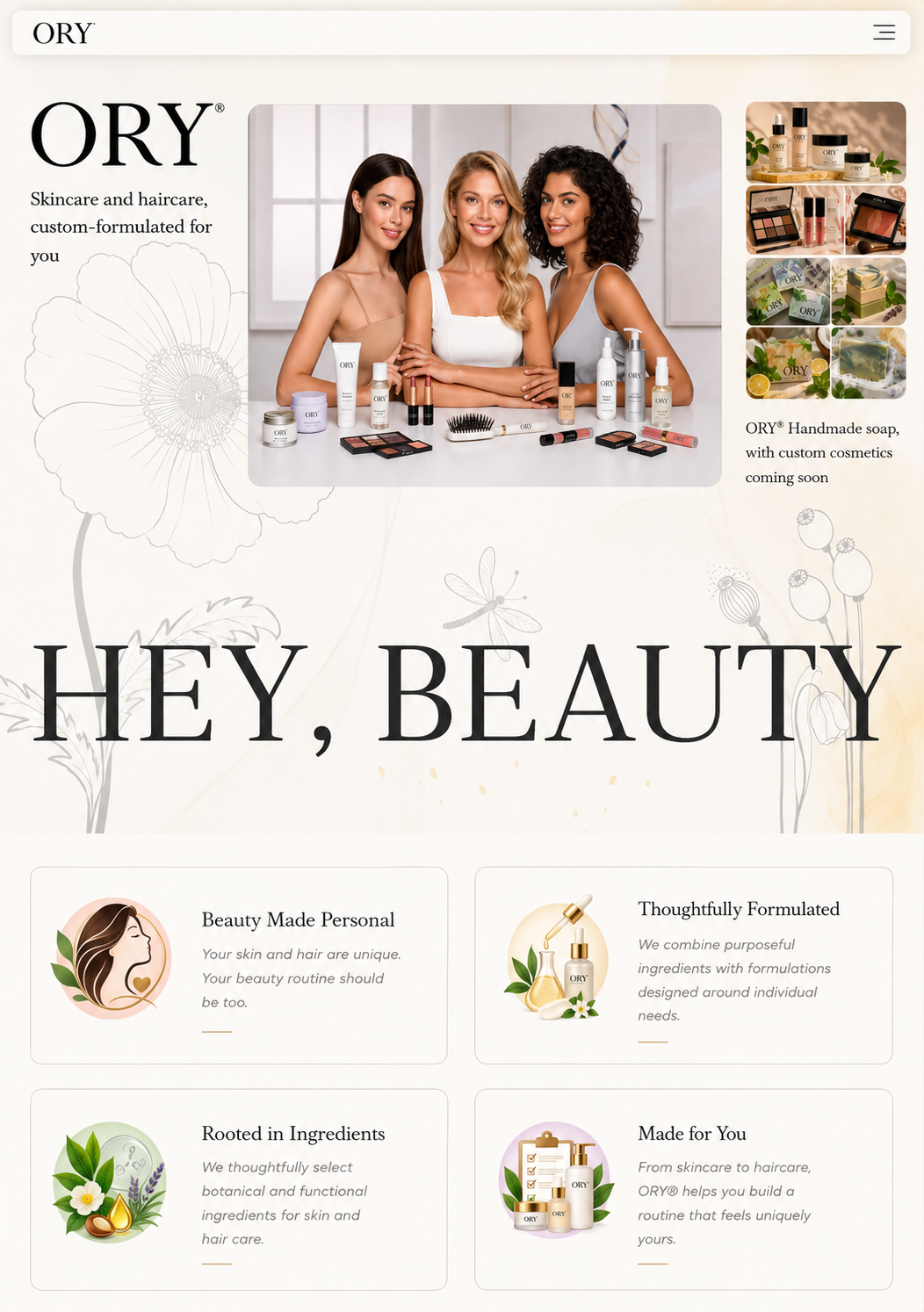
Claim: Saffron extract is used in all four ORY® product lines at low, standardized levels. |
Verification: Supported, with caveats. Saffron is added for antioxidant and skin benefits, not for color. Saffron is approved by FDA as a color additive only for food, not for cosmetics. We found no data on how much crocin survives soapmaking.
| Product line | Typical level | How ORY® uses it |
| Skincare | 0.05–0.5% standardized extract | Radiance serums, creams, eye creams, masks, and face oils. |
| Haircare | 0.05–0.2% | Scalp serums and hair oils. |
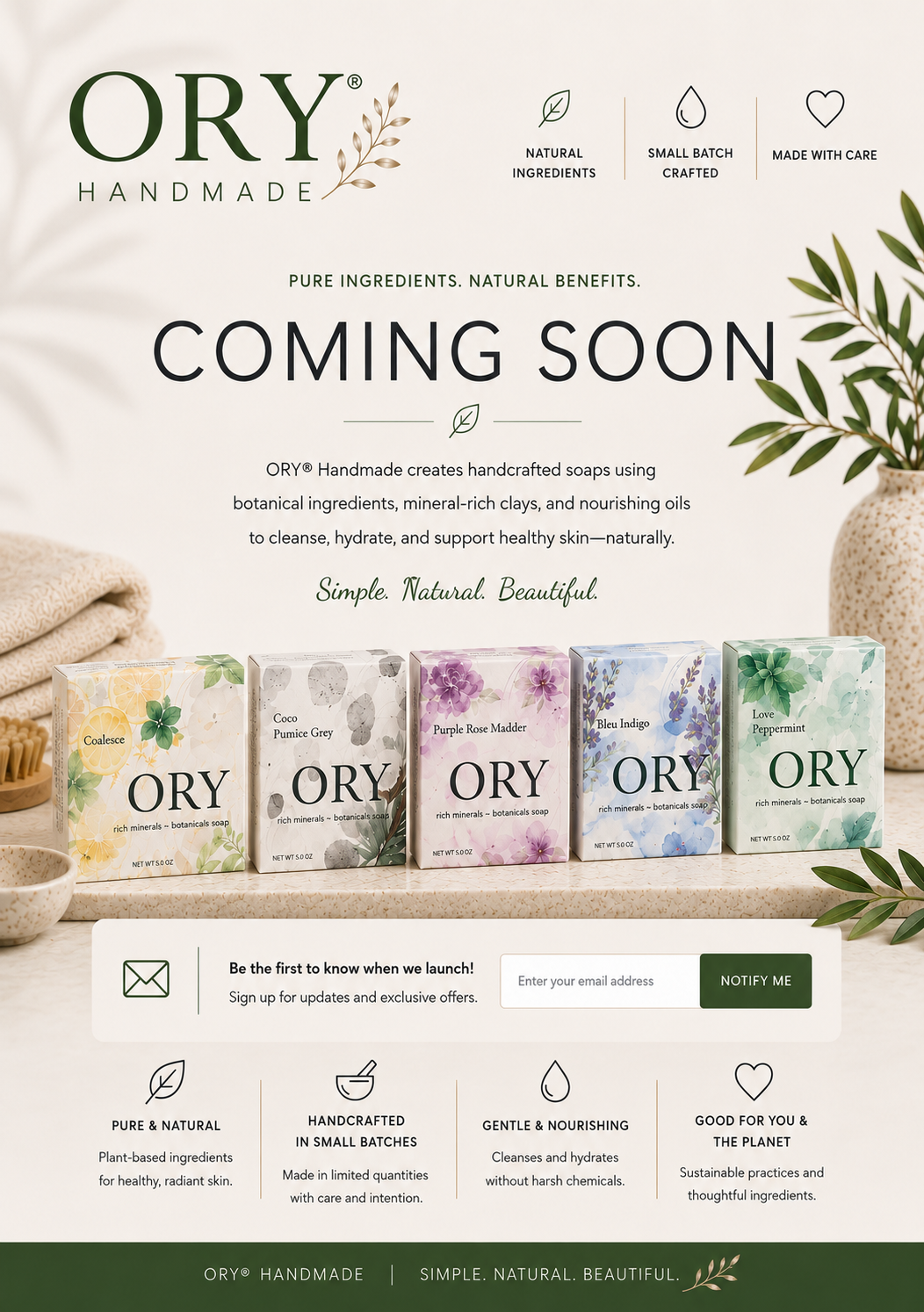
| Handmade Soap | 2–5% of oils as infusion | Saffron-infused oil in the recipe. |
| Cosmetics | 0.05–0.3% | Foundations, primers, and balms. |
Citations:
- U.S. Food and Drug Administration. Color Additives and Cosmetics: Fact Sheet; 21 CFR 70.3(g) and Part 73, Subpart C (color additives permitted in cosmetics). https://www.fda.gov/industry/color-additives/color-additives-and-cosmetics-fact-sheet
- What it shows: FDA rules: color additives in cosmetics must be approved for that use.
- U.S. Food and Drug Administration. Is It a Cosmetic, a Drug, or Both? (Or Is It Soap?) https://www.fda.gov/cosmetics/cosmetics-laws-regulations/it-cosmetic-drug-or-both-or-it-soap
- What it shows: FDA explains how soap is regulated.
- U.S. Food and Drug Administration. Color Additives and Cosmetics: Fact Sheet; 21 CFR 70.3(g) and Part 73, Subpart C (color additives permitted in cosmetics). https://www.fda.gov/industry/color-additives/color-additives-and-cosmetics-fact-sheet
7. Pros
Claim: A potent antioxidant with strong heritage appeal and flexible water- and oil-soluble forms. |
Verification: Supported, with caveats. Supported mainly by lab research.
Citations:
- Alavizadeh, S. H., & Hosseinzadeh, H. (2014). Bioactivity assessment and toxicity of crocin: A comprehensive review. Food and Chemical Toxicology, 64, 65–80. https://pubmed.ncbi.nlm.nih.gov/24275090/
- What it shows: Review.
- Alavizadeh, S. H., & Hosseinzadeh, H. (2014). Bioactivity assessment and toxicity of crocin: A comprehensive review. Food and Chemical Toxicology, 64, 65–80. https://pubmed.ncbi.nlm.nih.gov/24275090/
8. Cons
Claim: Saffron is costly, often adulterated, fades in light, and has limited human evidence. |
Verification: Supported. We list these limits so you have the full picture:
- Cost. Use levels are necessarily low.
- Adulteration. Requires verified sourcing.
- Light sensitivity. Crocin fades in light.
- Limited human studies. Evidence is mainly from the lab.
- Allergy. Uncommon but documented.
Citations:
- Fagot, D., Pham, D. M., Laboureau, J., et al. (2018). Crocin, a natural molecule with potentially beneficial effects against skin ageing. International Journal of Cosmetic Science, 40(4), 388–400. https://doi.org/10.1111/ics.12472
- What it shows: Evidence base is laboratory.
- Fagot, D., Pham, D. M., Laboureau, J., et al. (2018). Crocin, a natural molecule with potentially beneficial effects against skin ageing. International Journal of Cosmetic Science, 40(4), 388–400. https://doi.org/10.1111/ics.12472
9. Safety Notes
Claim: Patch test before use; for external use only. |
Verification: Supported. Follow these precautions:
- Patch test any new product on a small area for 24–48 hours before full use.
- Stop use if redness, burning, itching, or rash occurs, and talk to a healthcare provider.
- For external use only. Avoid the eyes. Do not use on broken or seriously damaged skin.
- If you are pregnant, nursing, have a medical condition, or are buying for a child, ask a healthcare provider before use.
Citations:
- Alavizadeh, S. H., & Hosseinzadeh, H. (2014). Bioactivity assessment and toxicity of crocin: A comprehensive review. Food and Chemical Toxicology, 64, 65–80. https://pubmed.ncbi.nlm.nih.gov/24275090/
- What it shows: Toxicity review.
- Alavizadeh, S. H., & Hosseinzadeh, H. (2014). Bioactivity assessment and toxicity of crocin: A comprehensive review. Food and Chemical Toxicology, 64, 65–80. https://pubmed.ncbi.nlm.nih.gov/24275090/
10. Product-line notes
- ORY® Skincare: For external use only. Not for deep or puncture wounds, animal bites, or serious burns.
- ORY® Haircare: Designed for scalp comfort and the look and feel of hair. Not intended to treat dandruff or scalp conditions, or to promote hair growth or prevent hair loss. If you notice sudden shedding or a persistent itchy, flaking scalp, see a dermatologist.
- ORY® Handmade Soap: Handmade soap is naturally alkaline, and each bar may vary slightly in color, scent, and texture. Not intended to treat eczema or any skin condition.
- ORY® Cosmetics: Lip products are not intended to treat or protect chapped or cracked lips. Do not share applicators, and replace any product that changes color, smell, or texture.
11. References
Peer-reviewed research
- Alavizadeh, S. H., & Hosseinzadeh, H. (2014). Bioactivity assessment and toxicity of crocin: A comprehensive review. Food and Chemical Toxicology, 64, 65–80. https://pubmed.ncbi.nlm.nih.gov/24275090/
- Fagot, D., Pham, D. M., Laboureau, J., et al. (2018). Crocin, a natural molecule with potentially beneficial effects against skin ageing. International Journal of Cosmetic Science, 40(4), 388–400. https://doi.org/10.1111/ics.12472
- Golmohammadzadeh, S., Jaafari, M. R., & Hosseinzadeh, H. (2010). Does saffron have antisolar and moisturizing effects? Iranian Journal of Pharmaceutical Research, 9(2), 133–140. https://pubmed.ncbi.nlm.nih.gov/24363719/
Government and regulatory sources
- U.S. Food and Drug Administration. Color Additives and Cosmetics: Fact Sheet; 21 CFR 70.3(g) and Part 73, Subpart C (color additives permitted in cosmetics). https://www.fda.gov/industry/color-additives/color-additives-and-cosmetics-fact-sheet
- U.S. Food and Drug Administration. Is It a Cosmetic, a Drug, or Both? (Or Is It Soap?) https://www.fda.gov/cosmetics/cosmetics-laws-regulations/it-cosmetic-drug-or-both-or-it-soap
- U.S. Food and Drug Administration. 21 CFR 310.527 — Drug products offered over-the-counter for external use as hair growers or for hair loss prevention. https://www.law.cornell.edu/cfr/text/21/310.527
