

At ORY®, we believe you should know what’s in your products and why. This page lists the published research behind what we say about birch bark extract. Each section starts with our claim, then tells you how well the research supports it, then lists the sources so you can read them yourself.
Please note: A prescription drug made from birch bark triterpenes (FILSUVEZ®) is FDA-approved to treat wounds in people with epidermolysis bullosa. ORY® birch bark products are cosmetics. They are not the same as that medicine and are not intended to treat wounds, burns, or any condition.
How to read this page Supported — backed by peer-reviewed research or official safety reviews. Supported, with caveats — the research points this way, but mostly from laboratory or animal studies, or at different strengths than ORY® uses. Limited evidence — little or no published research yet. We say so openly. |
1. General Description and Role
Claim: Birch bark extract comes from the white outer bark of birch trees and is rich in betulin and related triterpenes. In ORY® cosmetics it helps skin feel protected, smooth, and comfortable, especially dry or rough skin. |
Verification: Supported, with caveats. A birch triterpene gel sped up healing of split-thickness skin-graft donor sites and superficial partial-thickness burns in phase III trials, and a birch triterpene gel is an FDA-approved prescription drug for epidermolysis bullosa wounds. These are drug uses. Evidence for cosmetic benefits such as barrier support is mostly extrapolated from this research and lab work. We found no CIR safety assessment for birch bark extract.
Citations:
- Barret, J. P., et al. (2017). Accelerated re-epithelialization of partial-thickness skin wounds by a topical betulin gel: Results of a randomized phase III clinical trials program. Burns. https://pubmed.ncbi.nlm.nih.gov/28400148/
- What it shows: Phase III trials in skin-graft donor-site wounds.
- Frew, Q., Rennekampff, H. O., Dziewulski, P., et al. (2019). Betulin wound gel accelerated healing of superficial partial thickness burns: Results of a randomized, intra-individually controlled, phase III trial with 12-months follow-up. Burns, 45(4), 876–890. https://pubmed.ncbi.nlm.nih.gov/30559054/
- What it shows: Phase III trial in superficial partial-thickness burns.
- Chiesi Global Rare Diseases. (2023, December 19). FDA approval of FILSUVEZ® (birch triterpenes) topical gel for epidermolysis bullosa [press release]. https://www.globenewswire.com/news-release/2023/12/19/2798751/0/en/Chiesi-Global-Rare-Diseases-Receives-FDA-Approval-for-FILSUVEZ-birch-triterpenes-topical-gel-for-the-Treatment-of-Epidermolysis-Bullosa.html
- What it shows: FDA approval of a birch triterpene drug for epidermolysis bullosa wounds.
- Barret, J. P., et al. (2017). Accelerated re-epithelialization of partial-thickness skin wounds by a topical betulin gel: Results of a randomized phase III clinical trials program. Burns. https://pubmed.ncbi.nlm.nih.gov/28400148/
2. Composition and Production
Claim: Birch bark extract is made by solvent extraction of dried outer bark (a triterpene powder) or by oil infusion. Its main compounds are betulin, betulinic acid, lupeol, oleanolic acid, and erythrodiol. |
Verification: Supported. Composition is well documented.
Citations:
- Alakurtti, S., Mäkelä, T., Koskimies, S., & Yli-Kauhaluoma, J. (2006). Pharmacological properties of the ubiquitous natural product betulin. European Journal of Pharmaceutical Sciences, 29(1), 1–13. https://www.sciencedirect.com/science/article/abs/pii/S0928098706001102
- What it shows: Review of betulin and related triterpenes.
- Ebeling, S., Naumann, K., Pollok, S., et al. (2014). From a traditional medicinal plant to a rational drug: Understanding the clinically proven wound healing efficacy of birch bark extract. PLoS ONE, 9(1), e86147. https://doi.org/10.1371/journal.pone.0086147
- What it shows: Describes the triterpene extract used in research.
- Alakurtti, S., Mäkelä, T., Koskimies, S., & Yli-Kauhaluoma, J. (2006). Pharmacological properties of the ubiquitous natural product betulin. European Journal of Pharmaceutical Sciences, 29(1), 1–13. https://www.sciencedirect.com/science/article/abs/pii/S0928098706001102
3. Skin Type Suitability
Claim: Birch bark extract suits dry, mature, normal, and sensitive skin in balms and creams, and combination and oily skin at low levels. |
Verification: Limited evidence. We found no cosmetic clinical studies by skin type. Suitability is based on the extract’s oil-soluble, balm-friendly nature and the tolerability seen in drug trials.
Citations:
- Barret, J. P., et al. (2017). Accelerated re-epithelialization of partial-thickness skin wounds by a topical betulin gel: Results of a randomized phase III clinical trials program. Burns. https://pubmed.ncbi.nlm.nih.gov/28400148/
- What it shows: Tolerability in clinical trials of a birch triterpene gel.
- Barret, J. P., et al. (2017). Accelerated re-epithelialization of partial-thickness skin wounds by a topical betulin gel: Results of a randomized phase III clinical trials program. Burns. https://pubmed.ncbi.nlm.nih.gov/28400148/
4. Hair and Scalp Suitability
Claim: In haircare, birch bark extract is used in scalp oils and serums for a traditional, comfortable scalp feel. |
Verification: Limited evidence. Birch bark has traditional use in scalp care, but we found no clinical studies. ORY® haircare products are not intended to treat dandruff or scalp conditions, or to grow hair or prevent hair loss.
Citations:
- U.S. Food and Drug Administration. 21 CFR 310.527 — Drug products offered over-the-counter for external use as hair growers or for hair loss prevention. https://www.law.cornell.edu/cfr/text/21/310.527
- What it shows: FDA treats products marketed to grow hair or prevent hair loss as drugs.
- U.S. Food and Drug Administration. 21 CFR 310.527 — Drug products offered over-the-counter for external use as hair growers or for hair loss prevention. https://www.law.cornell.edu/cfr/text/21/310.527
5. Benefits
Claim: Birch bark extract helps dry, rough skin feel smoother and more comfortable and provides antioxidant support. |
Verification: Supported, with caveats. Lab research shows betulin affects skin-cell migration and inflammatory signals. Clinical evidence is for wound healing, which is a drug use; ORY® does not claim wound healing, repair, or antimicrobial effects.
Citations:
- Ebeling, S., Naumann, K., Pollok, S., et al. (2014). From a traditional medicinal plant to a rational drug: Understanding the clinically proven wound healing efficacy of birch bark extract. PLoS ONE, 9(1), e86147. https://doi.org/10.1371/journal.pone.0086147
- What it shows: Lab study of how birch bark triterpenes affect skin cells during healing.
- Alakurtti, S., Mäkelä, T., Koskimies, S., & Yli-Kauhaluoma, J. (2006). Pharmacological properties of the ubiquitous natural product betulin. European Journal of Pharmaceutical Sciences, 29(1), 1–13. https://www.sciencedirect.com/science/article/abs/pii/S0928098706001102
- What it shows: Review of anti-inflammatory and antioxidant activity.
- Ebeling, S., Naumann, K., Pollok, S., et al. (2014). From a traditional medicinal plant to a rational drug: Understanding the clinically proven wound healing efficacy of birch bark extract. PLoS ONE, 9(1), e86147. https://doi.org/10.1371/journal.pone.0086147
6. Use Across ORY® Product Lines
Claim: Birch bark extract is used in all four ORY® product lines. |
Verification: Supported, with caveats. Triterpenes are oil-soluble and heat-stable. We found no data on how much survives soapmaking, so ORY® makes no efficacy claims for soap.
| Product line | Typical level | How ORY® uses it |
| Skincare | 0.5–3% triterpene extract | Balms, barrier creams, serums, and hand creams. |
| Haircare | 0.2–1% | Scalp serums, shampoos, and scalp oils. |
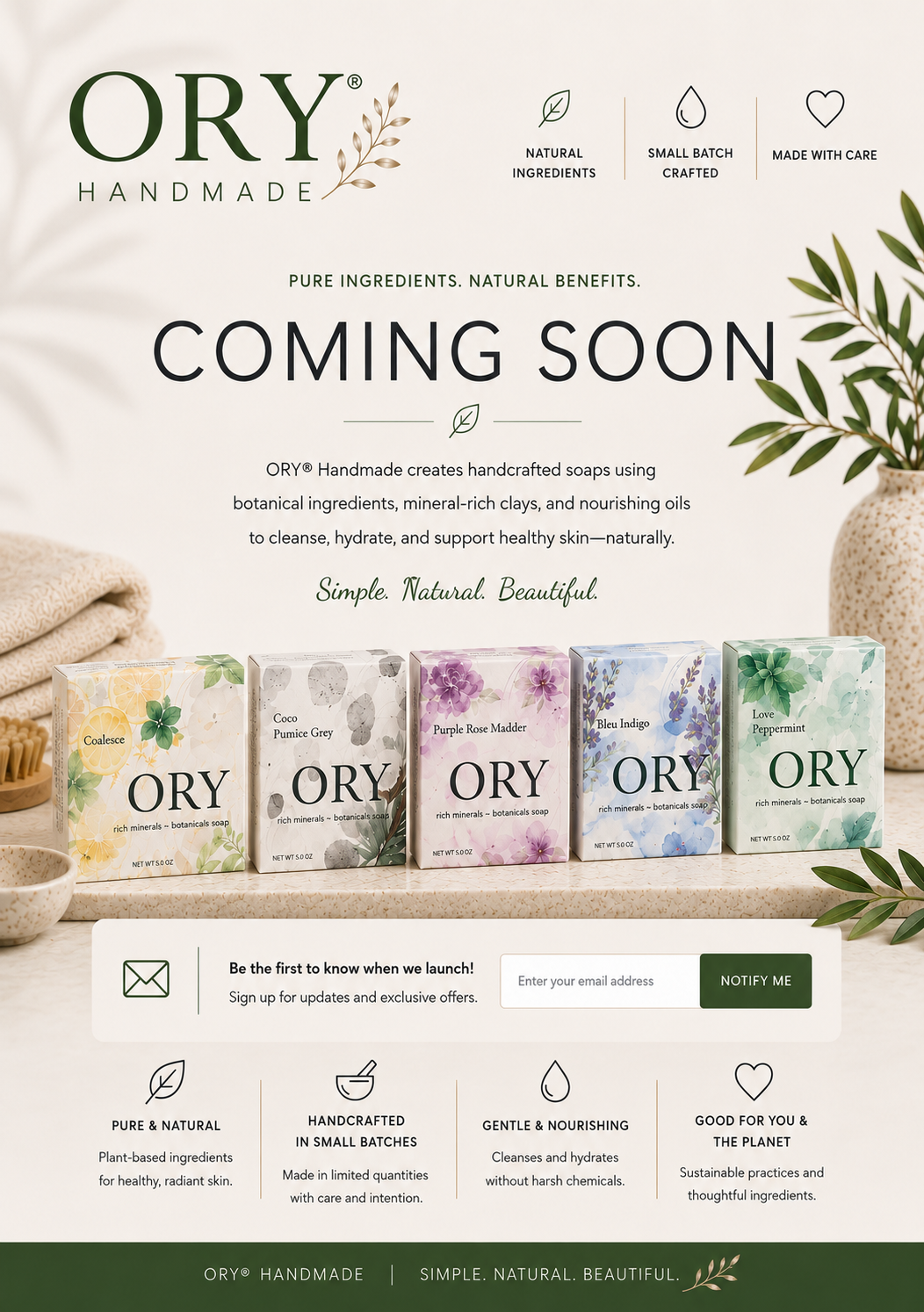
| Handmade Soap | 5–10% of oils as infusion | Birch-bark-infused oil in the recipe. |
| Cosmetics | 0.5–2% | Lip balms, cuticle balms, and tinted sticks. |
Citations:
- U.S. Food and Drug Administration. Is It a Cosmetic, a Drug, or Both? (Or Is It Soap?) https://www.fda.gov/cosmetics/cosmetics-laws-regulations/it-cosmetic-drug-or-both-or-it-soap
- What it shows: FDA explains how soap is regulated.
- U.S. Food and Drug Administration. Is It a Cosmetic, a Drug, or Both? (Or Is It Soap?) https://www.fda.gov/cosmetics/cosmetics-laws-regulations/it-cosmetic-drug-or-both-or-it-soap
7. Pros
Claim: Well-researched triterpenes, sustainable forestry by-product, stable, and balm-friendly. |
Verification: Supported, with caveats. Research strength is for drug uses, not cosmetic claims.
Citations:
- Alakurtti, S., Mäkelä, T., Koskimies, S., & Yli-Kauhaluoma, J. (2006). Pharmacological properties of the ubiquitous natural product betulin. European Journal of Pharmaceutical Sciences, 29(1), 1–13. https://www.sciencedirect.com/science/article/abs/pii/S0928098706001102
- What it shows: Review.
- Alakurtti, S., Mäkelä, T., Koskimies, S., & Yli-Kauhaluoma, J. (2006). Pharmacological properties of the ubiquitous natural product betulin. European Journal of Pharmaceutical Sciences, 29(1), 1–13. https://www.sciencedirect.com/science/article/abs/pii/S0928098706001102
8. Cons
Claim: Cosmetic evidence is limited, the extract needs an oil phase, it can be costly, and birch-allergic people should patch test. |
Verification: Supported. We list these limits so you have the full picture:
- Cosmetic evidence lags. Most clinical data are from wound-healing drug trials.
- Oil-soluble. Needs an oil phase or oleogel.
- Cost. Standardized extract is premium.
- Birch allergy. Patch test if allergic to birch.
- Scent. Crude extracts can smell woody or smoky.
Citations:
- Barret, J. P., et al. (2017). Accelerated re-epithelialization of partial-thickness skin wounds by a topical betulin gel: Results of a randomized phase III clinical trials program. Burns. https://pubmed.ncbi.nlm.nih.gov/28400148/
- What it shows: Shows the clinical data are for wounds.
- Barret, J. P., et al. (2017). Accelerated re-epithelialization of partial-thickness skin wounds by a topical betulin gel: Results of a randomized phase III clinical trials program. Burns. https://pubmed.ncbi.nlm.nih.gov/28400148/
9. Safety Notes
Claim: Patch test before use; for external use only. |
Verification: Supported. Follow these precautions:
- Patch test any new product on a small area for 24–48 hours before full use.
- If you have a birch allergy, patch test carefully.
- Stop use if redness, burning, itching, or rash occurs, and talk to a healthcare provider.
- For external use only. Avoid the eyes. Do not use on broken or seriously damaged skin.
- If you are pregnant, nursing, have a medical condition, or are buying for a child, ask a healthcare provider before use.
Citations:
- Alakurtti, S., Mäkelä, T., Koskimies, S., & Yli-Kauhaluoma, J. (2006). Pharmacological properties of the ubiquitous natural product betulin. European Journal of Pharmaceutical Sciences, 29(1), 1–13. https://www.sciencedirect.com/science/article/abs/pii/S0928098706001102
- What it shows: Safety and pharmacology review.
- Alakurtti, S., Mäkelä, T., Koskimies, S., & Yli-Kauhaluoma, J. (2006). Pharmacological properties of the ubiquitous natural product betulin. European Journal of Pharmaceutical Sciences, 29(1), 1–13. https://www.sciencedirect.com/science/article/abs/pii/S0928098706001102
10. Product-line notes
- ORY® Skincare: For external use only. Not for deep or puncture wounds, animal bites, or serious burns.
- ORY® Haircare: Designed for scalp comfort and the look and feel of hair. Not intended to treat dandruff or scalp conditions, or to promote hair growth or prevent hair loss. If you notice sudden shedding or a persistent itchy, flaking scalp, see a dermatologist.
- ORY® Handmade Soap: Handmade soap is naturally alkaline, and each bar may vary slightly in color, scent, and texture. Not intended to treat eczema or any skin condition.
- ORY® Cosmetics: Lip products are not intended to treat or protect chapped or cracked lips. Do not share applicators, and replace any product that changes color, smell, or texture.
11. References
Peer-reviewed research
- Alakurtti, S., Mäkelä, T., Koskimies, S., & Yli-Kauhaluoma, J. (2006). Pharmacological properties of the ubiquitous natural product betulin. European Journal of Pharmaceutical Sciences, 29(1), 1–13. https://www.sciencedirect.com/science/article/abs/pii/S0928098706001102
- Barret, J. P., et al. (2017). Accelerated re-epithelialization of partial-thickness skin wounds by a topical betulin gel: Results of a randomized phase III clinical trials program. Burns. https://pubmed.ncbi.nlm.nih.gov/28400148/
- Ebeling, S., Naumann, K., Pollok, S., et al. (2014). From a traditional medicinal plant to a rational drug: Understanding the clinically proven wound healing efficacy of birch bark extract. PLoS ONE, 9(1), e86147. https://doi.org/10.1371/journal.pone.0086147
- Frew, Q., Rennekampff, H. O., Dziewulski, P., et al. (2019). Betulin wound gel accelerated healing of superficial partial thickness burns: Results of a randomized, intra-individually controlled, phase III trial with 12-months follow-up. Burns, 45(4), 876–890. https://pubmed.ncbi.nlm.nih.gov/30559054/
Government and regulatory sources
- Chiesi Global Rare Diseases. (2023, December 19). FDA approval of FILSUVEZ® (birch triterpenes) topical gel for epidermolysis bullosa [press release]. https://www.globenewswire.com/news-release/2023/12/19/2798751/0/en/Chiesi-Global-Rare-Diseases-Receives-FDA-Approval-for-FILSUVEZ-birch-triterpenes-topical-gel-for-the-Treatment-of-Epidermolysis-Bullosa.html
- U.S. Food and Drug Administration. Is It a Cosmetic, a Drug, or Both? (Or Is It Soap?) https://www.fda.gov/cosmetics/cosmetics-laws-regulations/it-cosmetic-drug-or-both-or-it-soap
- U.S. Food and Drug Administration. 21 CFR 310.527 — Drug products offered over-the-counter for external use as hair growers or for hair loss prevention. https://www.law.cornell.edu/cfr/text/21/310.527
