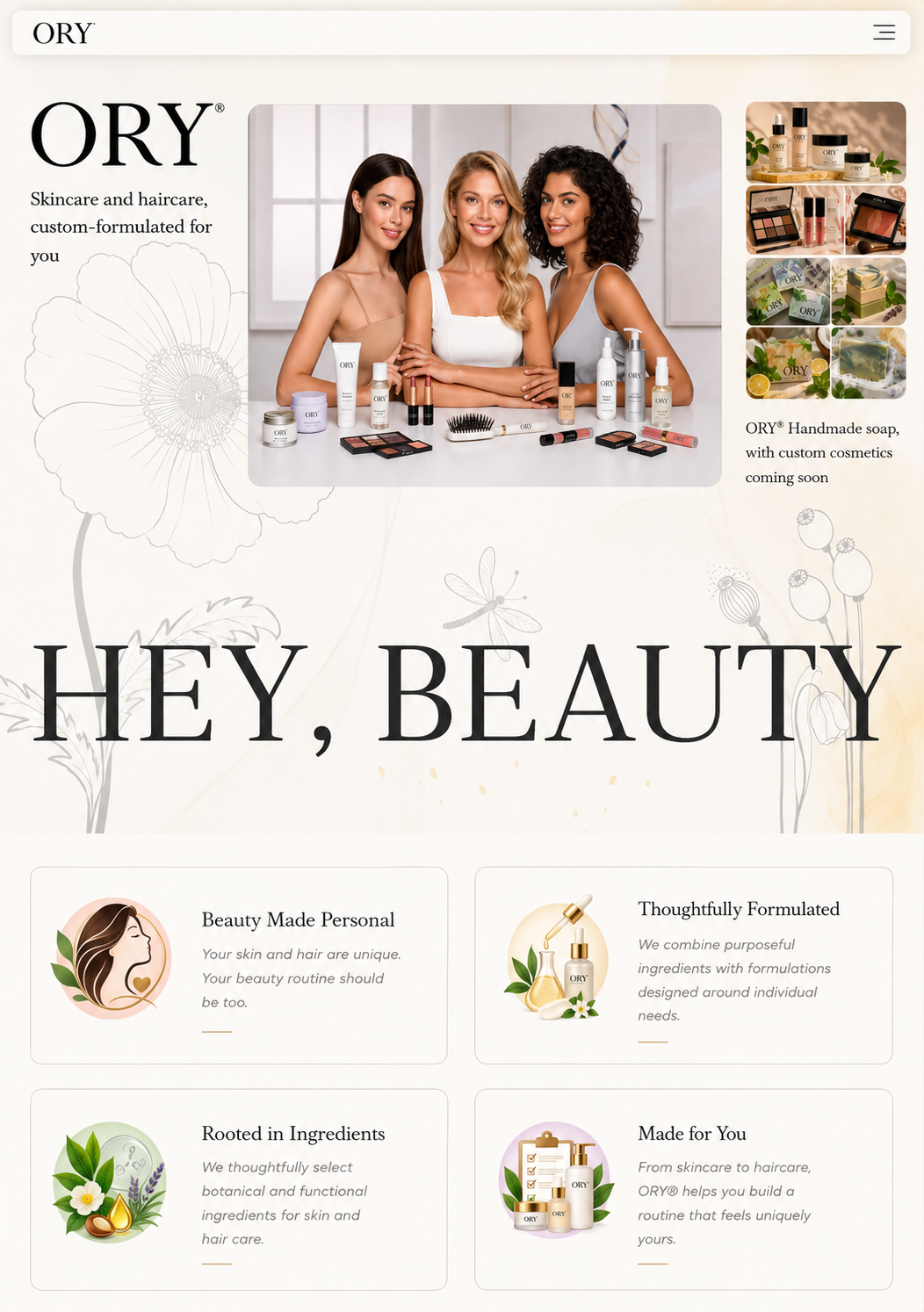
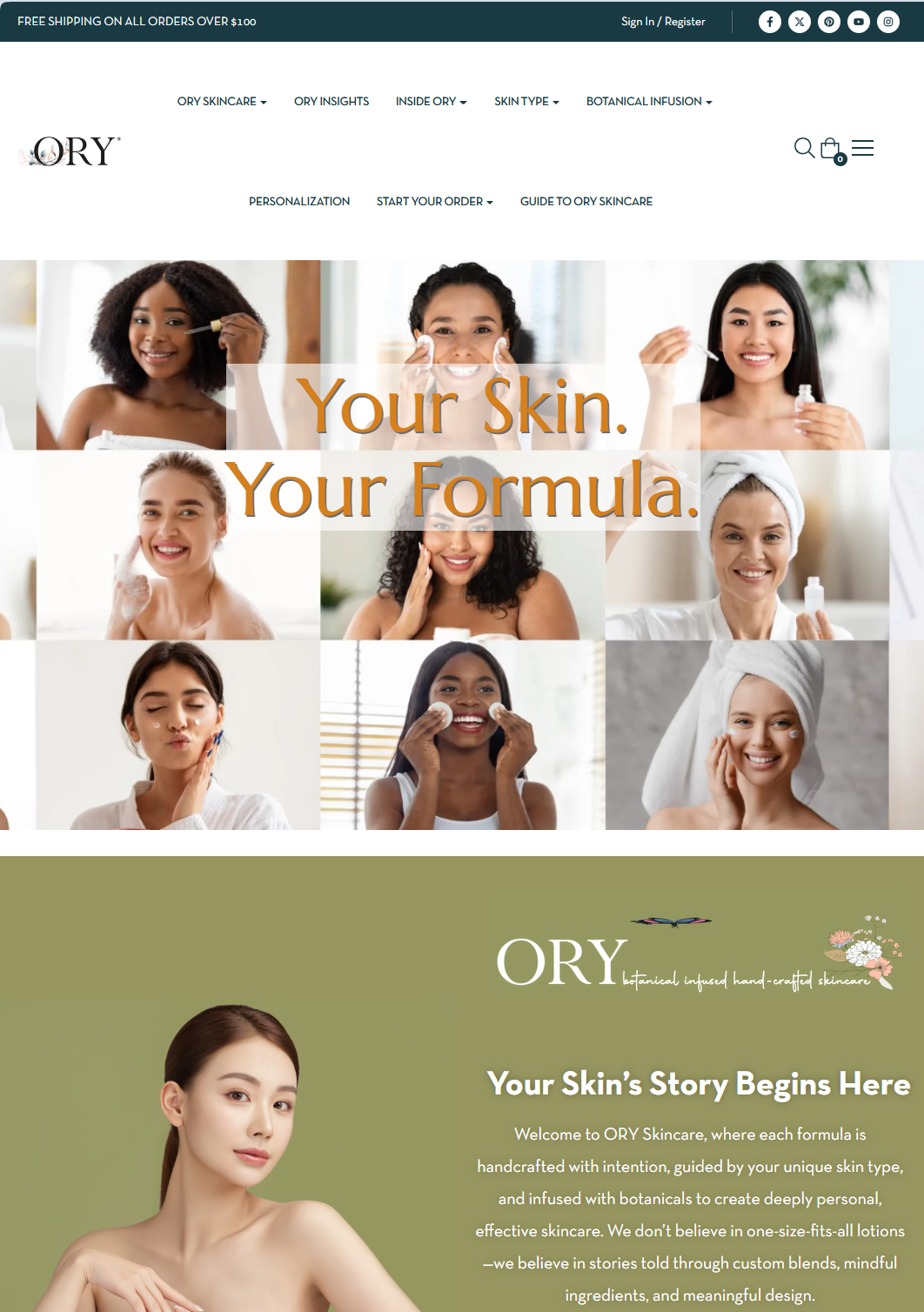

ORY® product lines:
◐ Skincare (limited: cleansers and masks; not a skin-dye product)
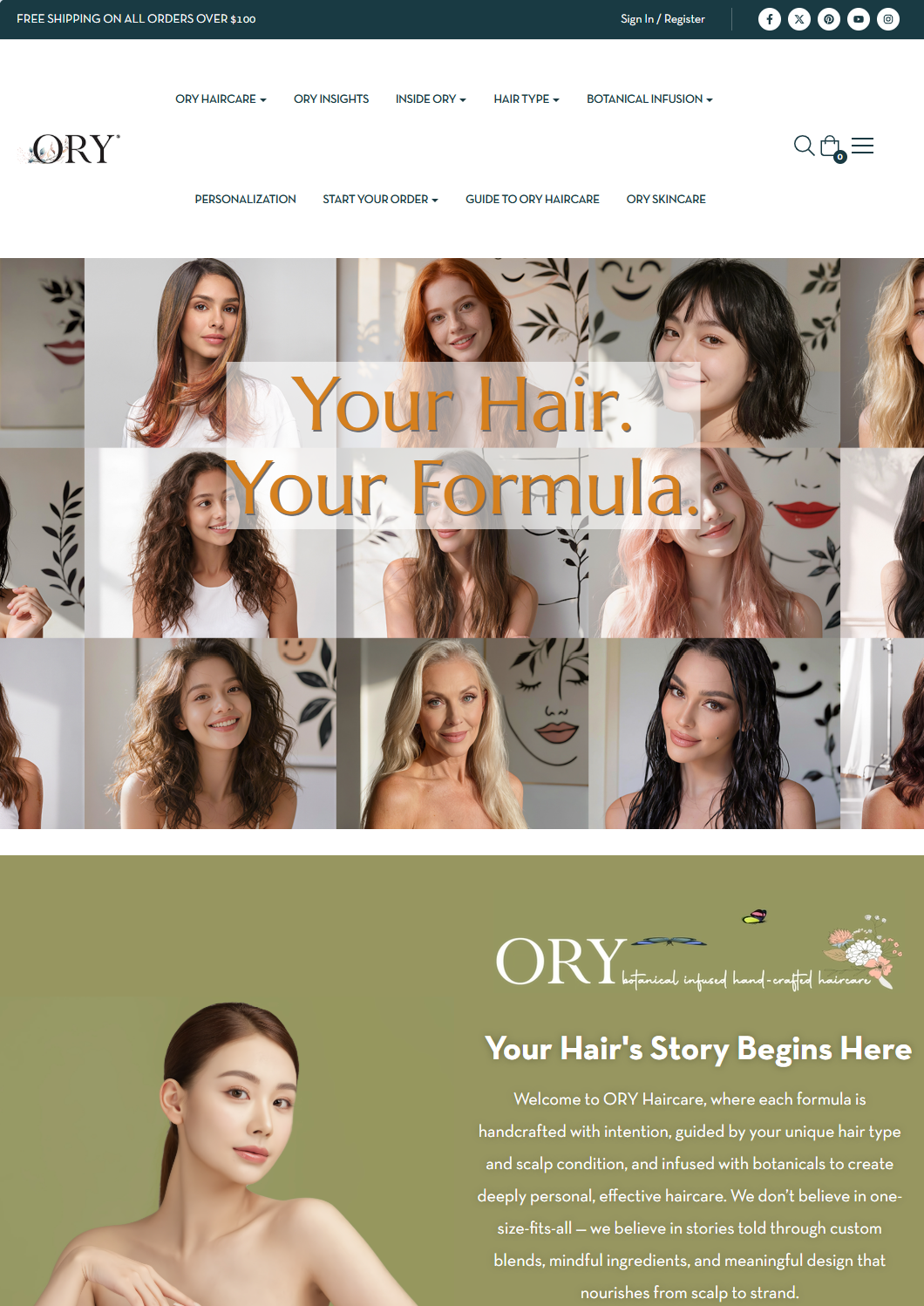
☑ Haircare (natural permanent red-orange dye and strengthening treatment)
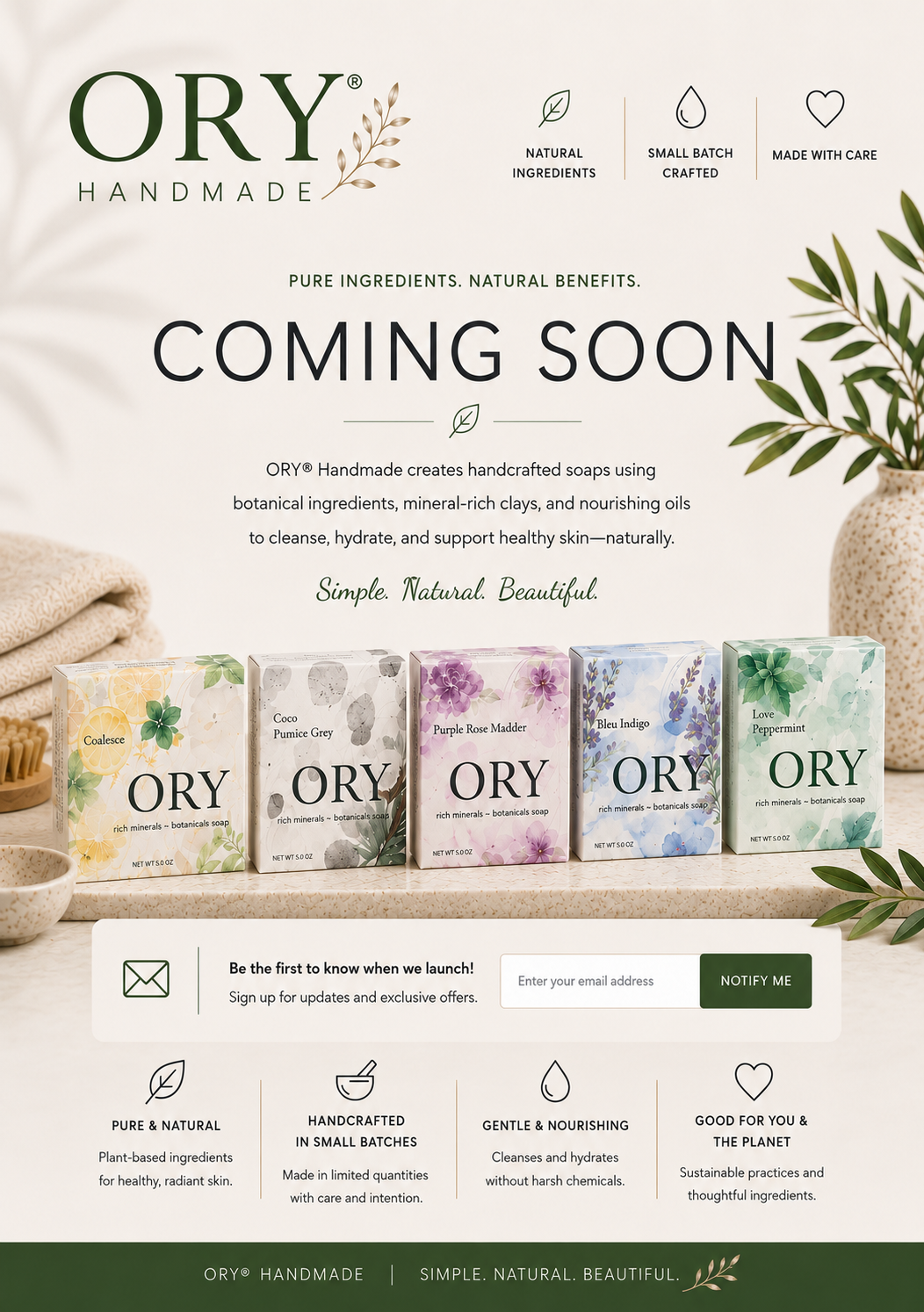
☑ Handmade Soap (natural olive-green colorant and gentle exfoliant)
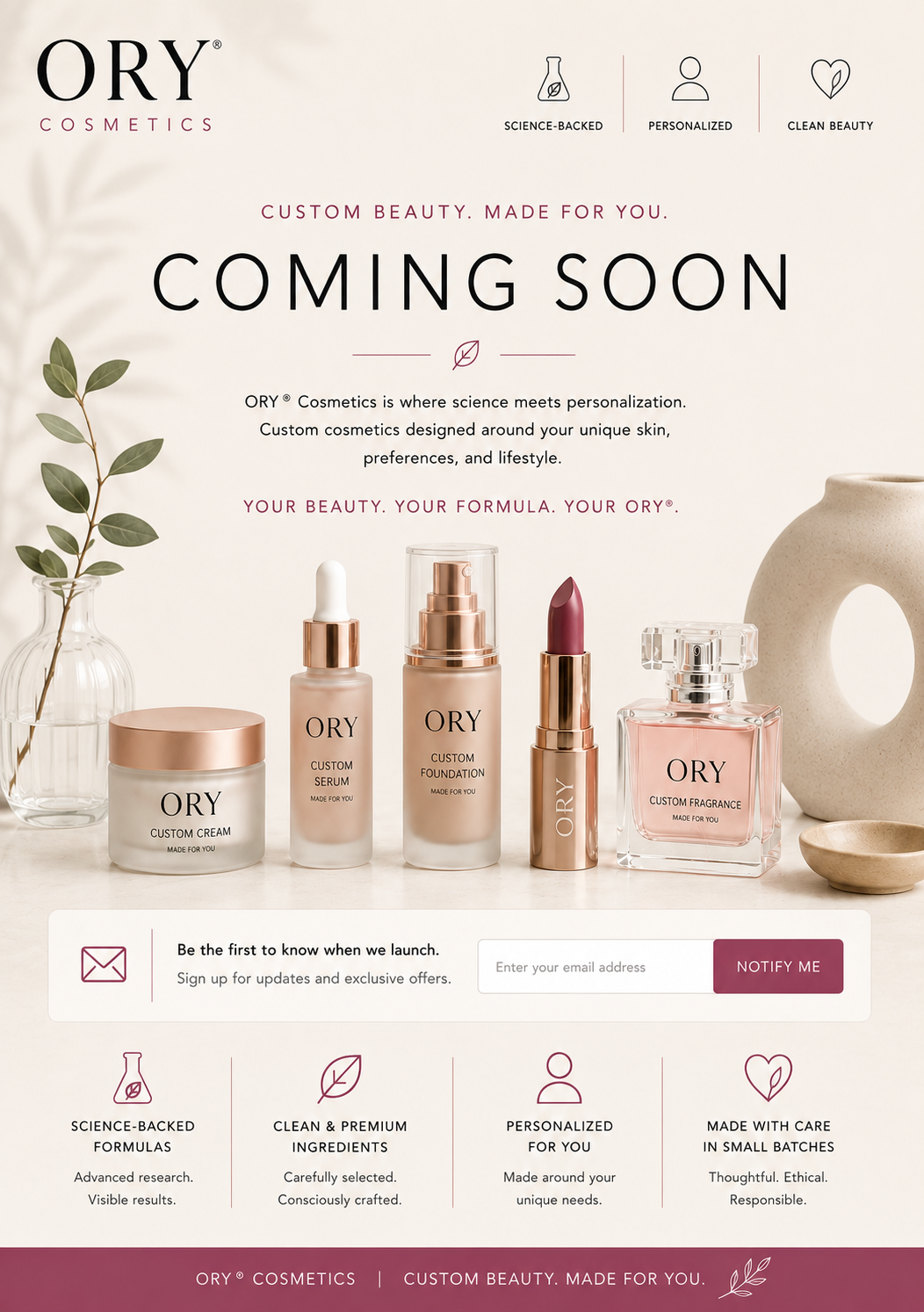
◐ Cosmetics (limited: hair-color products only — not for skin or brow/lash tinting under U.S. rules) — dual-use botanical with strict color-use limits
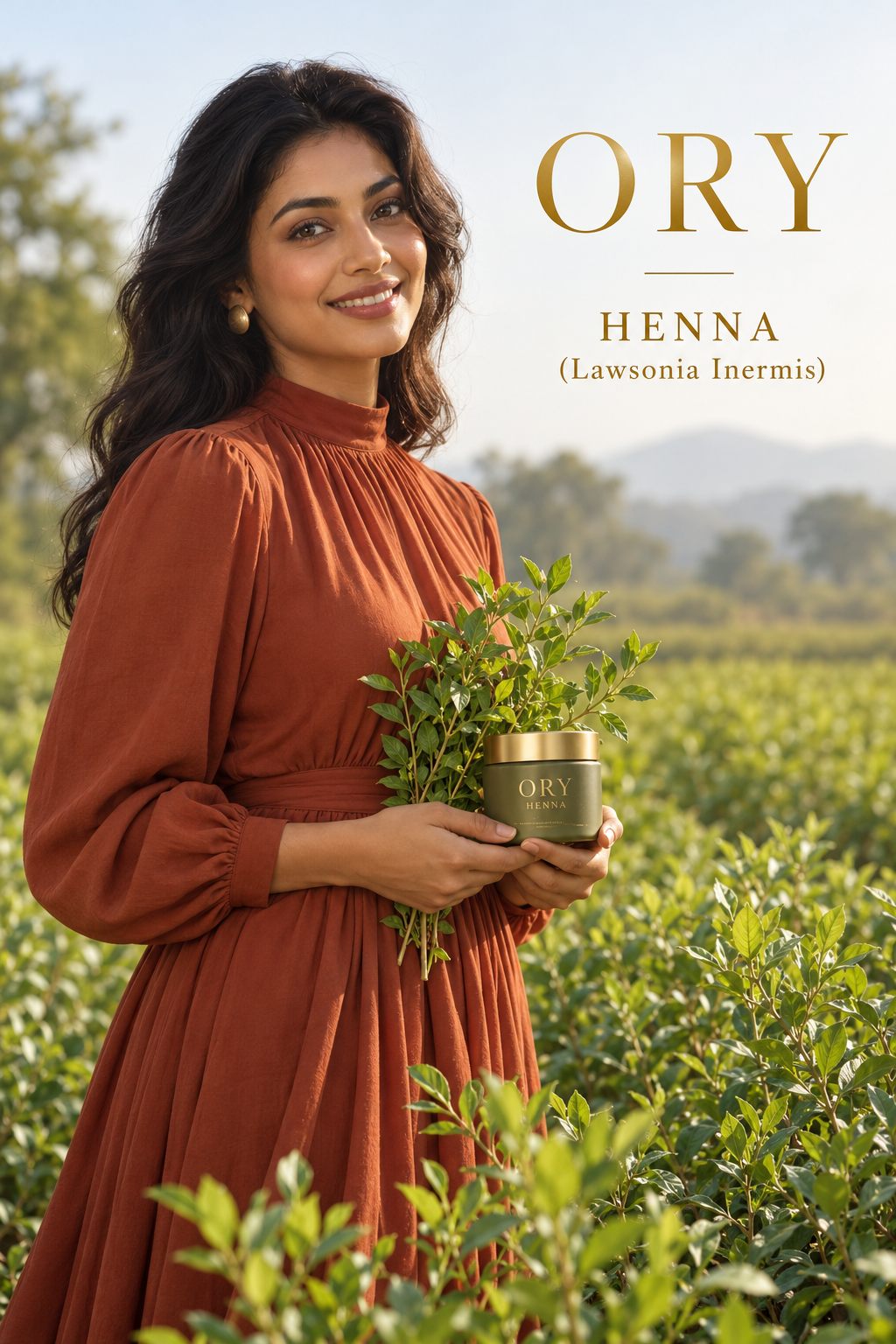
Henna is the dried, powdered leaf of Lawsonia inermis, a shrub of North Africa, the Middle East, and South Asia, used for at least 5,000 years to dye hair, nails, and skin. Its color comes from lawsone, a naphthoquinone that binds permanently to keratin, staining hair red-orange while coating and strengthening the fiber — the original, and still the safest, permanent natural hair dye. Pharmacological reviews document henna’s antimicrobial, antifungal, anti-inflammatory, and wound-healing activity [1]. Three safety rules govern its use. “Black henna” is not henna at all but henna adulterated with para-phenylenediamine (PPD), a potent sensitizer that has caused severe allergic reactions and lifelong PPD allergy [2, 3] — ORY® uses only pure, body-art-quality, PPD-free henna. In the United States, henna is approved as a color additive only for hair; skin application (body art) and eyebrow/eyelash tinting are not approved uses. And henna should never be applied to infants or people with G6PD deficiency, in whom it has caused hemolysis [4]. Within those rules, henna is a valuable natural hair dye, a strengthening hair treatment, and a soap colorant.
What is Henna (Lawsonia Inermis) made of?
Henna is produced by drying and finely milling leaves harvested before flowering; lawsone content (1–3%) determines dye strength. Constituents [1]:
- Lawsone (2-hydroxy-1,4-naphthoquinone, 1–3%): The dye; released by mild acid (lemon, tea) and binds keratin irreversibly — red-orange on hair, orange-brown on skin.
- Tannins and gallic acid: Astringent, antimicrobial; contribute to hair coating and shine.
- Flavonoids (luteolin, apigenin) and coumarins: Antioxidant, anti-inflammatory.
- Mucilage and fiber: Conditioning film; gentle exfoliation in soap.
- Grades: Body-art-quality (BAQ) — pure, sifted, PPD- and metal-free; “compound henna” and “black henna” — adulterated, never used by ORY®.
- Color notes: Pure henna gives only red-orange; “brown/black henna” results require indigo (Indigofera tinctoria) — a separate botanical — layered after henna.
What skin type is best suited for Henna (Lawsonia Inermis)?
Henna’s skincare role is limited to rinse-off and non-dye uses; skin dyeing is outside ORY®‘s approved uses:
- Oily: Astringent, antimicrobial rinse-off masks and cleansers (brief contact to avoid staining).
- Acne-prone: Antimicrobial tannins in rinse-off products [1].
- Normal: Foot and nail care tradition (nail-staining note).
- Combination: Rinse-off use only.
- Sensitive: Pure henna is a rare allergen; PPD “black henna” is a severe one [2, 3]; patch test.
- Dry and Mature: Not indicated.
What hair type is best suited for Henna (Lawsonia Inermis)?
Henna is a natural permanent dye and strengthening treatment for many hair types:
- Color-treated (natural-dye seekers): Permanent red-orange to auburn color without PPD, ammonia, or peroxide; layer with indigo for browns and black.
- Dry or damaged: Lawsone–tannin coating fills the cuticle, adding strength, thickness, and shine.
- Mature or thinning (grey coverage): Covers grey with a copper tone (grey takes henna brightly); conditions fragile hair.
- Straight and wavy: Adds body and shine; may loosen curl pattern slightly.
- Curly and coily: Strengthens, but can loosen curls and dry hair over repeated use — follow with deep moisture; use cassia (neutral henna) for conditioning without color.
- Oily scalp: Astringent scalp benefit; antimicrobial support [1].
- Dandruff-prone scalp: Traditional anti-dandruff and antifungal use [1].
- Sensitive scalp: Pure henna generally tolerated; patch test; never black henna.
What are the benefits of Henna (Lawsonia Inermis)?
Henna’s benefits are supported by pharmacological review and long tradition [1]:
- Natural permanent hair color: Lawsone binds keratin; no PPD, ammonia, or peroxide.
- Hair strengthening and thickening: Coats and fills the cuticle; reduces breakage; adds body.
- Shine: Smooth lawsone–tannin film.
- Antimicrobial and antifungal: Scalp and skin microbes [1].
- Anti-inflammatory: Flavonoids and coumarins [1].
- Astringent scalp balance: Tannins reduce oiliness.
- Grey coverage: Copper-to-auburn on grey.
- Soap colorant and exfoliant: Olive-green powder that survives cold process; gentle scrub.
Dual use across ORY® product lines
Henna is haircare-led, a genuine soap ingredient, and limited elsewhere by U.S. color-additive rules and staining.
| ORY® line | Dual use? | How it is used | Typical level |
|---|---|---|---|
|
ORY® Skincare |
Limited |
Rinse-off antimicrobial masks and cleansers (brief contact); no skin-dye or body-art products. |
1–5% powder, rinse-off |
|
ORY® Haircare |
Yes |
Henna hair-color kits and pastes, henna-indigo two-step color, strengthening henna gloss treatments, cassia (neutral) conditioning. |
100% BAQ powder mixed to paste; 5–20% in gloss treatments |
|
ORY® Handmade Soap |
Yes |
Natural olive-green colorant and gentle exfoliant in cold-process bars (may tint lather slightly; does not dye skin at soap levels). |
1–2 tsp per lb of oils |
|
ORY® Cosmetics |
Limited |
Hair-color products only; not for brow/lash tinting or skin makeup under U.S. rules. |
— |
Pros and cons of Henna (Lawsonia Inermis)
Pros
Cons
- Safest permanent natural hair dye: When pure and PPD-free.
- Strengthens and conditions: Rare among dyes.
- Antimicrobial and anti-inflammatory: [1].
- Soap-stable natural color: Green bars.
- Millennia of use: Strong heritage.
- PPD adulteration risk: “Black henna” causes severe allergy [2, 3]; source BAQ henna only.
- U.S. use limited to hair: No skin or brow/lash tinting claims.
- Permanent, red-orange only: Cannot be lightened easily; browns need indigo; may interact unpredictably with previously chemically dyed hair.
- G6PD deficiency and infants: Hemolysis risk — contraindicated [4].
- Drying/curl-loosening with repeat use: Follow with moisture; cassia for conditioning-only.
- Messy, time-consuming: 1–4-hour application; stains hands, tubs, and fabric.
What is the best application of Henna (Lawsonia Inermis)?
Henna is used as a hair-color and strengthening treatment and a soap colorant:
- Henna hair color: Mix BAQ henna with warm water or weak tea (mild acid) to a paste, rest 2–8 hours for dye release, apply to clean damp hair 1–4 hours under a cap, rinse without shampoo; color deepens over 48 hours.
- Two-step brown/black: Henna first, then indigo paste; or mix for brown tones.
- Henna gloss: 1–2 tbsp henna in a deep conditioner, 30–60 minutes, for shine and slight tint.
- Cassia treatment: Cassia obovata (neutral henna) for strengthening without color.
- Strand test and patch test: Always, 48 hours before use — especially over chemically dyed hair.
- Soap: 1–2 tsp powder per lb of oils at trace.
- Rinse-off scalp/skin mask: 5–15 minutes; rinse thoroughly.
Peer-reviewed references
- Semwal RB, Semwal DK, Combrinck S, Cartwright-Jones C, Viljoen A. Lawsonia inermis L. (henna): ethnobotanical, phytochemical and pharmacological aspects. Journal of Ethnopharmacology. 2014;155(1):80–103.
- de Groot AC. Side-effects of henna and semi-permanent “black henna” tattoos: a full review. Contact Dermatitis. 2013;69(1):1–25.
- Kang IJ, Lee MH. Quantification of para-phenylenediamine and heavy metals in henna dye. Contact Dermatitis. 2006;55(1):26–29.
- Raupp P, Hassan JA, Varughese M, Kristiansson B. Henna causes life threatening haemolysis in glucose-6-phosphate dehydrogenase deficiency. Archives of Disease in Childhood. 2001;85(5):411–412.
Disclaimer:
The information on this page is provided by ORY International, LC for educational purposes only. It summarizes published research about henna (Lawsonia inermis) as an ingredient, including laboratory and animal studies and clinical studies of formulas that may differ from ORY® products. Results from these studies may not apply to every person or to ORY® products. This page is not medical advice and does not replace advice from a dermatologist, physician, or other qualified healthcare provider.
ORY® Skincare, Haircare, Handmade Soap, and Cosmetics products are cosmetics. They are not intended to diagnose, treat, cure, mitigate, or prevent any disease or condition, including dandruff, fungal or bacterial infections, wounds, acne, hair loss, or any other condition. References to FDA or Cosmetic Ingredient Review (CIR) findings describe the ingredient, not ORY® products, and do not mean FDA has reviewed or approved any ORY® product.
Henna hair color: Do not use in the area of the eye. Do not use on cut or abraded scalp. Do not use on children or on anyone with G6PD deficiency. Henna color is permanent and may affect later chemical hair services; always do a strand test and a 48-hour patch test.
Results vary by skin and scalp type, formulation, and use. Pure henna is a rare allergen; “black henna” containing PPD can cause severe allergy. Henna can cause serious red-blood-cell damage (hemolysis) in people with G6PD deficiency. Any cosmetic can cause irritation, sometimes from other ingredients. Always patch test, follow label directions, and stop use if irritation occurs. If you are pregnant, nursing, have a medical condition, or are buying for a child, consult a healthcare provider before use.
ORY International, LC works to keep this page accurate and current but makes no warranty as to its completeness. To the fullest extent permitted by law, ORY International, LC is not liable for any loss or injury arising from reliance on this information or from use of any product contrary to its label directions. To report a reaction, contact us at [insert contact email / phone].