

ORY® product lines:
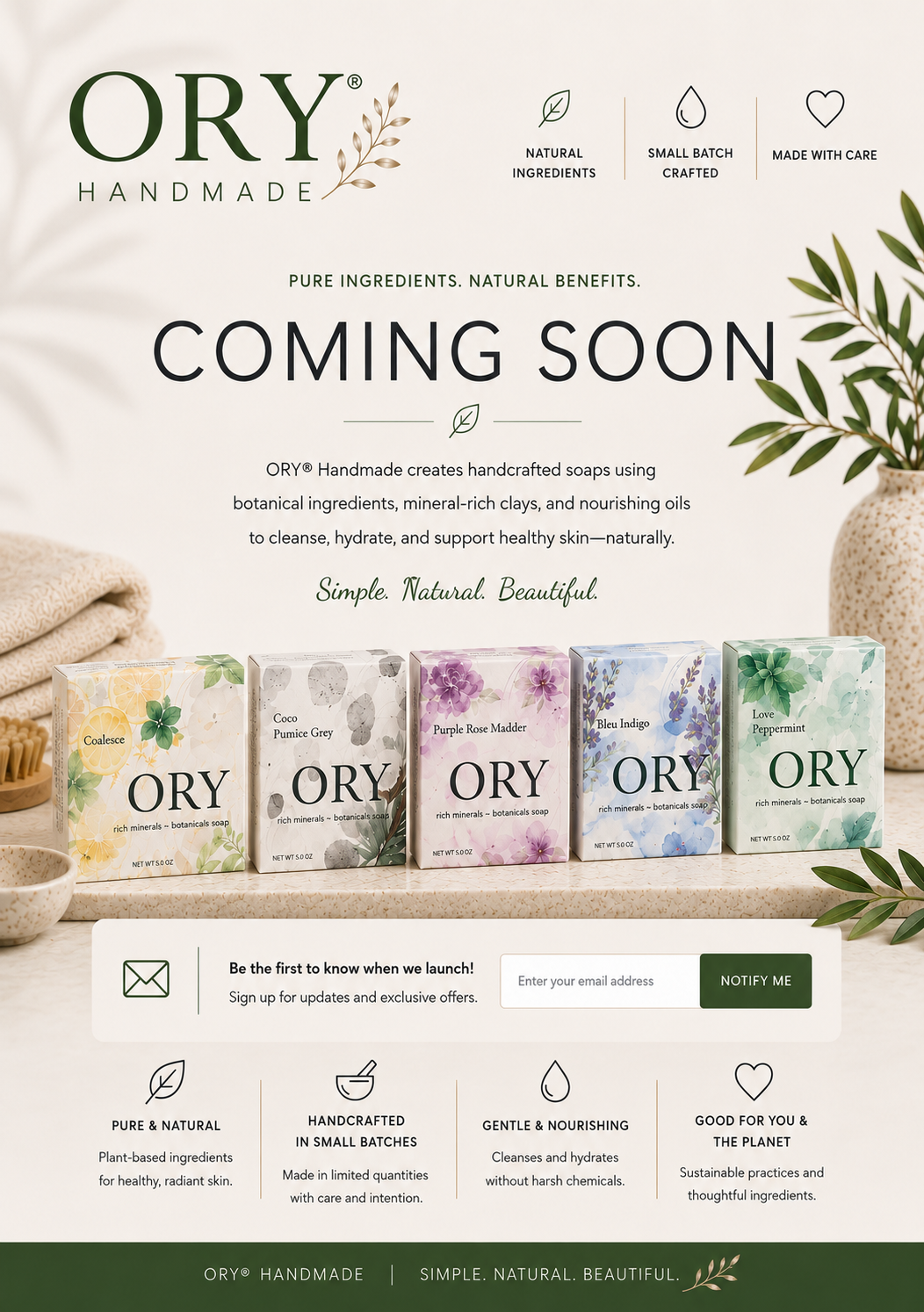
☑ Skincare
☑ Haircare (volume, shine, strength — vegan keratin alternative)
◐ Handmade Soap (syndet/liquid; partial survival in cold process)
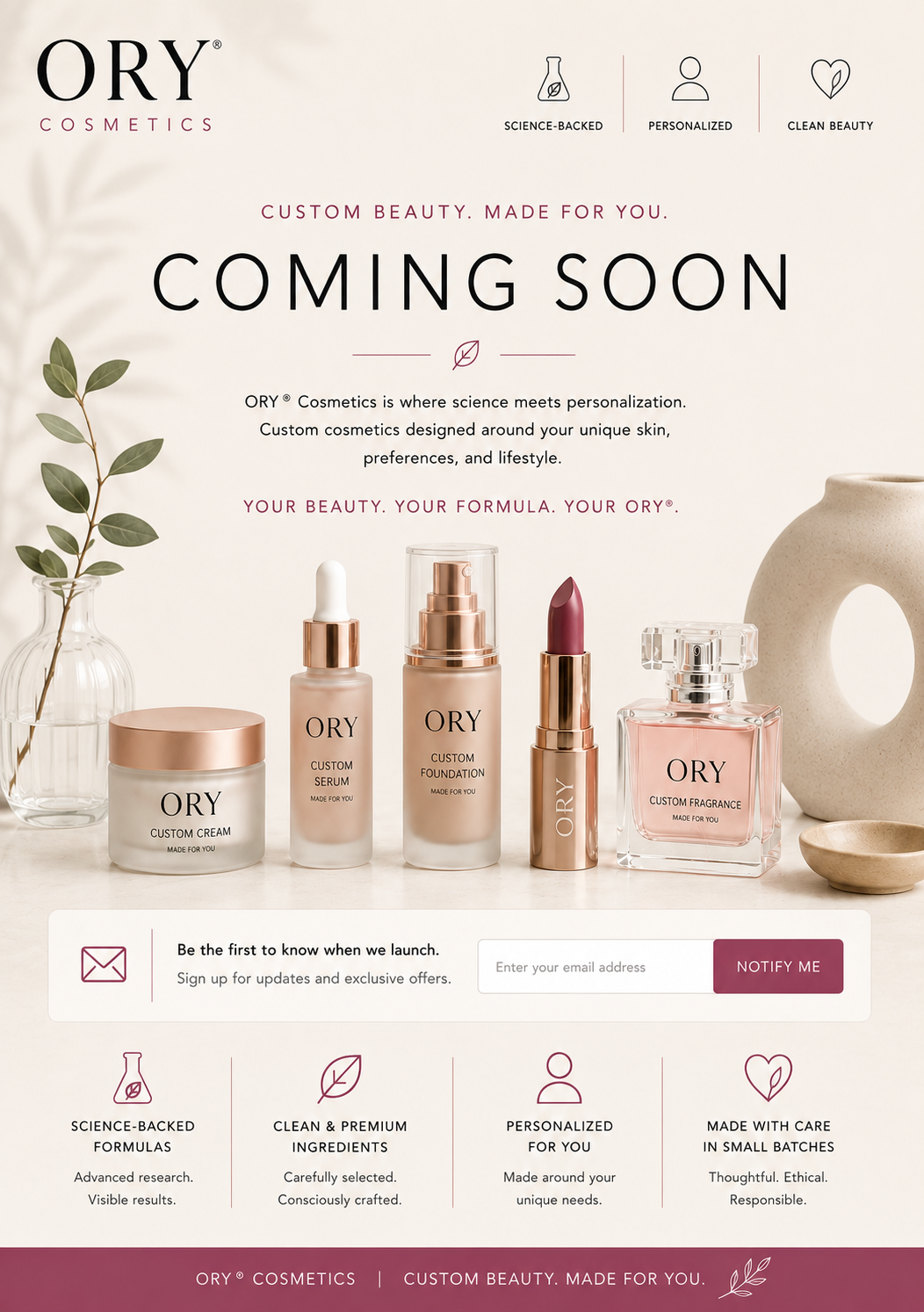
☑ Cosmetics — dual-use vegan protein
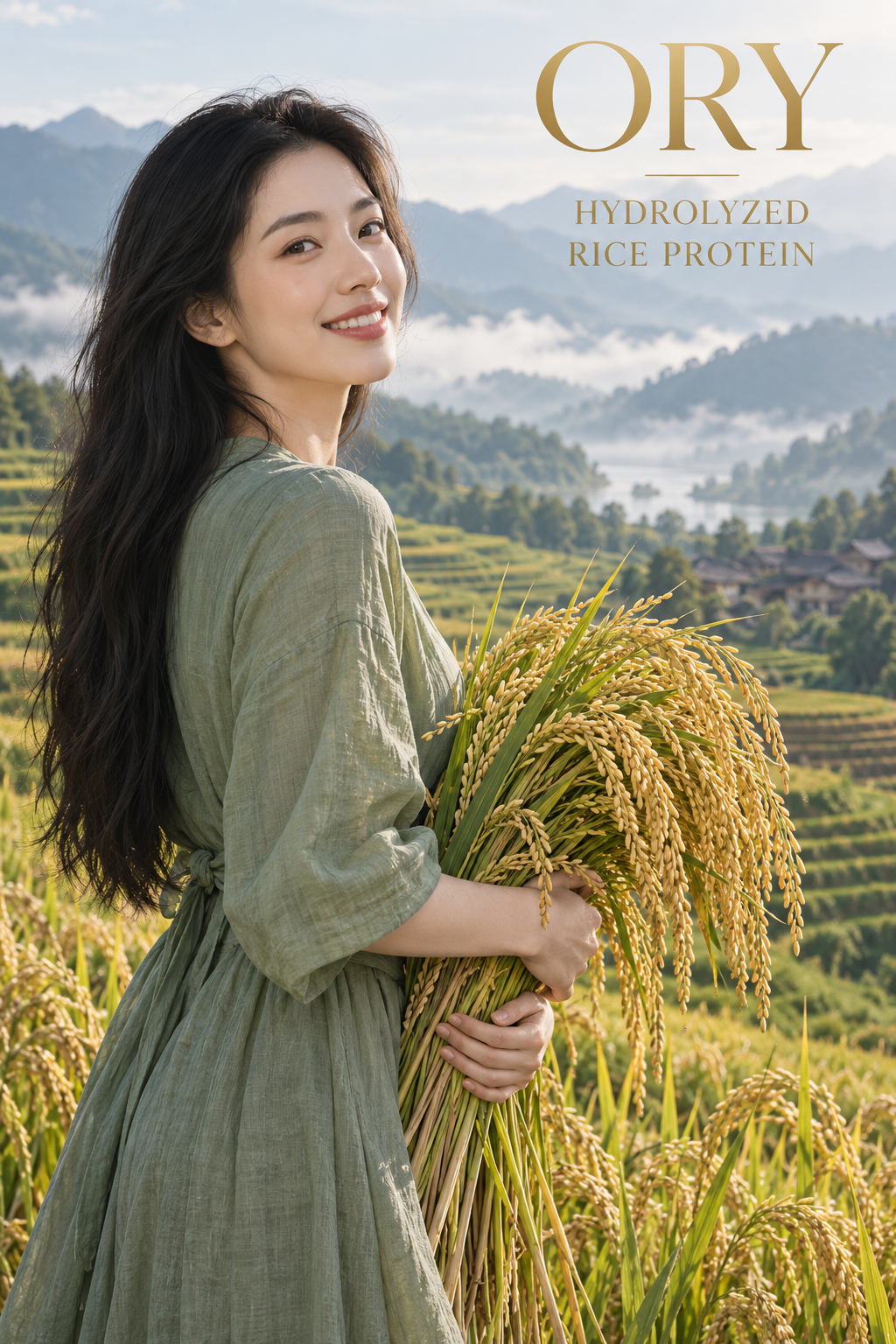
Hydrolyzed rice protein is the plant-based, gluten-free protein hydrolysate that gives fine and limp hair body without weight — and the vegan alternative to keratin and silk. Rice protein is rich in the amino acids glutamic acid, arginine, leucine, and cystine and, from the bran fraction, carries antioxidant peptides and ferulic-acid derivatives [2]. Hydrolyzed to low-to-medium molecular weight, it penetrates and coats the hair fiber to increase volume, shine, and strength, and on skin it forms a light, moisture-binding film [1]. Because it is hypoallergenic relative to wheat and animal proteins, gluten-free, and sustainably sourced from rice-processing by-products, it is ORY®‘s default vegan protein across haircare, skincare, and cosmetics. Molecular weight decides everything: low-molecular-weight peptides (<1,000 Da) penetrate the hair cortex and skin surface to strengthen and hydrate from within; medium weights (1,000–5,000 Da) film-form on the cuticle for shine and protection; high weights (>10,000 Da) sit on the surface — and, in rinse-off products used on the face, are the fraction linked to sensitization (the hydrolyzed-wheat-protein facial-soap allergy cases). ORY® specifies low-to-medium molecular weight hydrolysates and keeps protein levels modest in facial cleansers and soap.
What is Hydrolyzed Rice Protein made of?
Hydrolyzed rice protein is produced by enzymatic hydrolysis of rice endosperm or bran protein, then filtered and standardized. Points to know [1, 2]:
- Amino-acid profile: High in glutamic acid, arginine, leucine, aspartic acid, and cystine; supports NMF and film formation.
- Molecular weight: Typically 1,000–3,000 Da (penetrating plus film-forming); low-MW grades available.
- Bran-derived antioxidants (bran grades): Ferulic-acid and phenolic peptides [2].
- Gluten-free, hypoallergenic (relative to wheat), vegan, upcycled from rice processing.
- Physical form: Amber aqueous solution (20–25% solids) or powder; water-soluble; pH 4–7; add at cool-down.
- Typical use: 0.5–3% haircare; 0.5–2% skincare; 0.5–1% cosmetics.
What skin type is best suited for Hydrolyzed Rice Protein?
Hydrolyzed rice protein suits all seven ORY® skin types as a gentle, gluten-free film-forming hydrator:
- Dry: Hydrolyzed rice protein forms a hydrating, moisture-binding film and supplies amino acids that support the natural moisturizing factor.
- Mature: Film-forming peptides give a tightening, smoothing feel; amino acids support the barrier.
- Sensitive: Gluten-free and hypoallergenic relative to wheat; a good choice for sensitive customers; patch test.
- Normal: Light hydration and a silky feel in serums and lotions.
- Combination and Oily: Oil-free film-forming hydration; low levels in gels and toners.
- Acne-prone: Non-comedogenic; keep levels low in leave-ons.
What hair type is best suited for Hydrolyzed Rice Protein?
Hydrolyzed rice protein is the volume-and-shine protein for fine hair and the vegan repair choice:
- Straight and wavy: The core use — body and volume for fine, limp hair without weight.
- Mature or thinning: Thickens the feel of fine fibers; strengthens.
- Dry or damaged: Fills cuticle gaps; improves shine and strength (vegan keratin alternative).
- Color-treated or chemically processed: Protein reinforcement and shine.
- Curly and coily: Light strengthening; balance with moisture.
- Oily scalp: Rinse-off volumizing shampoos.
- Sensitive scalp, dandruff-prone: Hypoallergenic protein; neutral for the scalp.
What are the benefits of Hydrolyzed Rice Protein?
Hydrolyzed rice protein’s benefits are supported by protein-cosmetics literature and rice-bran research [1–3]:
- Volume and body: Film-forming peptides increase fiber diameter feel and lift [1, 3].
- Shine: Smooths the cuticle for light reflection.
- Strength and elasticity: Reduces breakage in fine and damaged hair [1].
- Moisture binding: Amino acids hold water on hair and skin.
- Antioxidant (bran grades): Ferulic and phenolic peptides [2].
- Skin film-forming hydration: Light, smoothing, tightening feel [1].
- Hypoallergenic and gluten-free: Sensitive and celiac-conscious customers.
- Vegan keratin/silk alternative: Plant-based repair.
Dual use across ORY® product lines
Hydrolyzed rice protein serves haircare, skincare, and cosmetics; in the soap line it is best in syndet and liquid products.
| ORY® line | Dual use? | How it is used | Typical level |
|---|---|---|---|
|
ORY® Skincare |
Yes |
Film-forming serums, lotions, tightening masks, hand creams, gluten-free lines. |
0.5–2% |
|
ORY® Haircare |
Yes |
Volumizing shampoos and conditioners, vegan protein masks and leave-ins, shampoo/conditioner bars. |
0.5–3% |
|
ORY® Handmade Soap |
Limited |
Syndet and liquid soaps and shampoo bars (0.5–2%); partial survival/label value in cold-process bars; keep facial-soap levels low. |
0.5–2% |
|
ORY® Cosmetics |
Yes |
Volumizing mascaras, foundations (smoothing film), lip products. |
0.5–1% |
Pros and cons of Hydrolyzed Rice Protein
Pros
Cons
- Vegan, gluten-free, hypoallergenic: Broad suitability.
- Volume without weight: Fine-hair hero.
- Antioxidant bran grades: [2].
- Upcycled, sustainable: Rice by-product.
- Surfactant- and cationic-compatible: Easy to formulate.
- Less repair power than keratin: No cysteine-rich disulfide interaction; choose keratin for heavy damage.
- Protein overload: Alternate with moisture.
- Limited independent clinical trials: Evidence is protein-class and supplier data.
- Amber color, slight odor: At high levels.
- Preservation: Protein solutions need robust preservation.
What is the best application of Hydrolyzed Rice Protein?
Hydrolyzed rice protein is used for volume, shine, and vegan strengthening:
- Volumizing shampoo/conditioner: 1–2%.
- Vegan protein mask: 2–3% with BTMS; alternate with moisture masks.
- Leave-in volumizer: 1%.
- Film-forming serum or tightening mask: 1–2%.
- Hand cream: 0.5–1%.
- Shampoo bar: 1–2%.
- Cosmetics: 0.5–1% in mascara or foundation.
Peer-reviewed references
- Secchi G. Role of protein in cosmetics. Clinics in Dermatology. 2008;26(4):321–325.
- Fabian C, Ju YH. A review on rice bran protein: its properties and extraction methods. Critical Reviews in Food Science and Nutrition. 2011;51(9):816–827.
- Gavazzoni Dias MFR. Hair cosmetics: an overview. International Journal of Trichology. 2015;7(1):2–15.
- Fukutomi Y, Itagaki Y, Taniguchi M, et al. Rhinoconjunctival sensitization to hydrolyzed wheat protein in facial soap can induce wheat-dependent exercise-induced anaphylaxis. Journal of Allergy and Clinical Immunology. 2011;127(2):531–533.
Disclaimer:
The information on this page is provided by ORY International, LC for educational purposes only. It summarizes published research about hydrolyzed rice protein as an ingredient, including laboratory and animal studies and clinical studies of formulas that may differ from ORY® products. Results from these studies may not apply to every person or to ORY® products. This page is not medical advice and does not replace advice from a dermatologist, physician, or other qualified healthcare provider.
ORY® Skincare, Haircare, Handmade Soap, and Cosmetics products are cosmetics. They are not intended to diagnose, treat, cure, mitigate, or prevent any disease or condition, including eczema, dermatitis, acne, dandruff, or any other condition. References to FDA or Cosmetic Ingredient Review (CIR) findings describe the ingredient, not ORY® products, and do not mean FDA has reviewed or approved any ORY® product.
Results vary by skin and scalp type, formulation, and use. Rice protein allergy is rare. Any cosmetic can cause irritation, sometimes from other ingredients. Always patch test, follow label directions, and stop use if irritation occurs. If you are pregnant, nursing, have a medical condition, or are buying for a child, consult a healthcare provider before use.
ORY International, LC works to keep this page accurate and current but makes no warranty as to its completeness. To the fullest extent permitted by law, ORY International, LC is not liable for any loss or injury arising from reliance on this information or from use of any product contrary to its label directions. To report a reaction, contact us at [insert contact email / phone].