
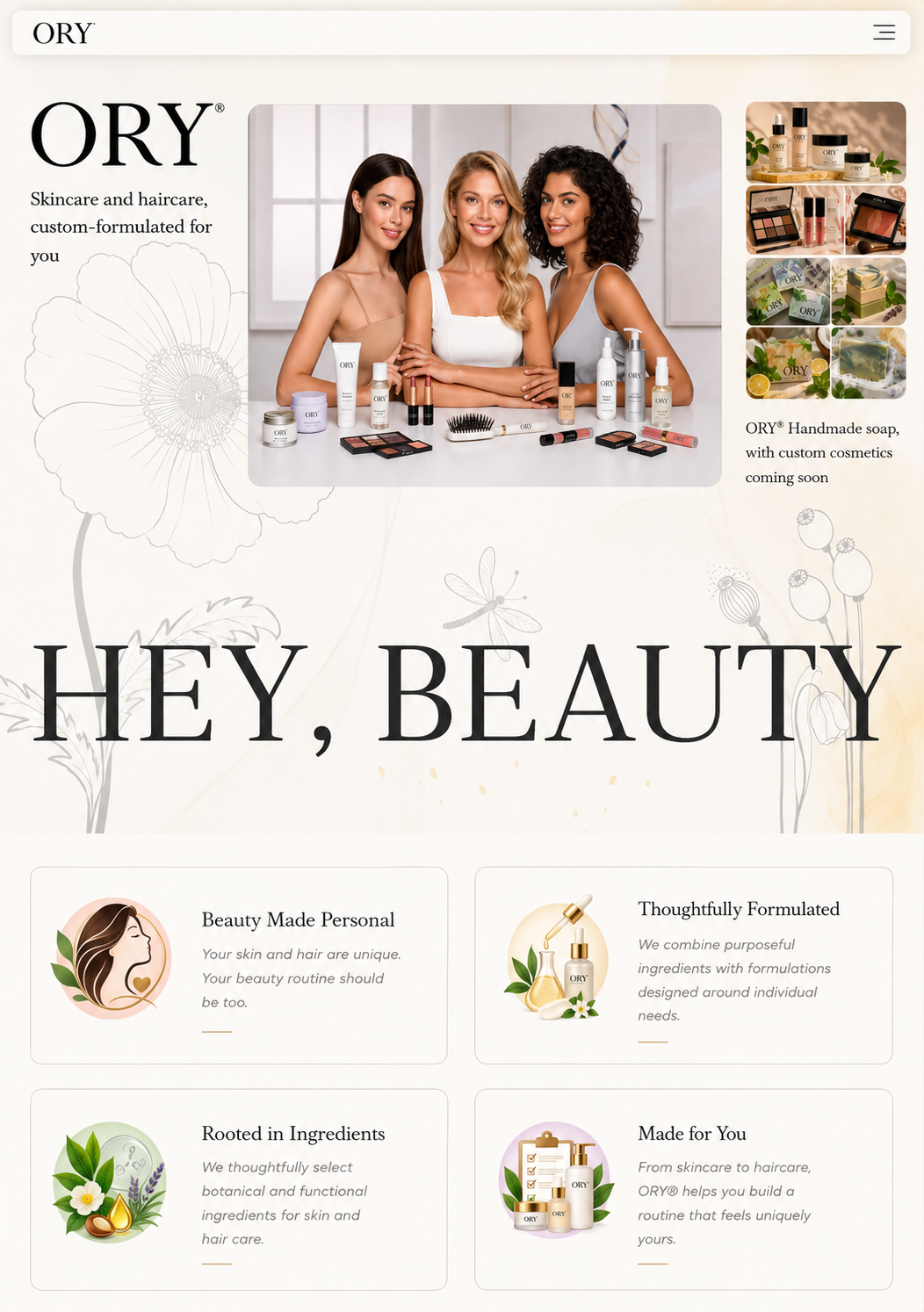
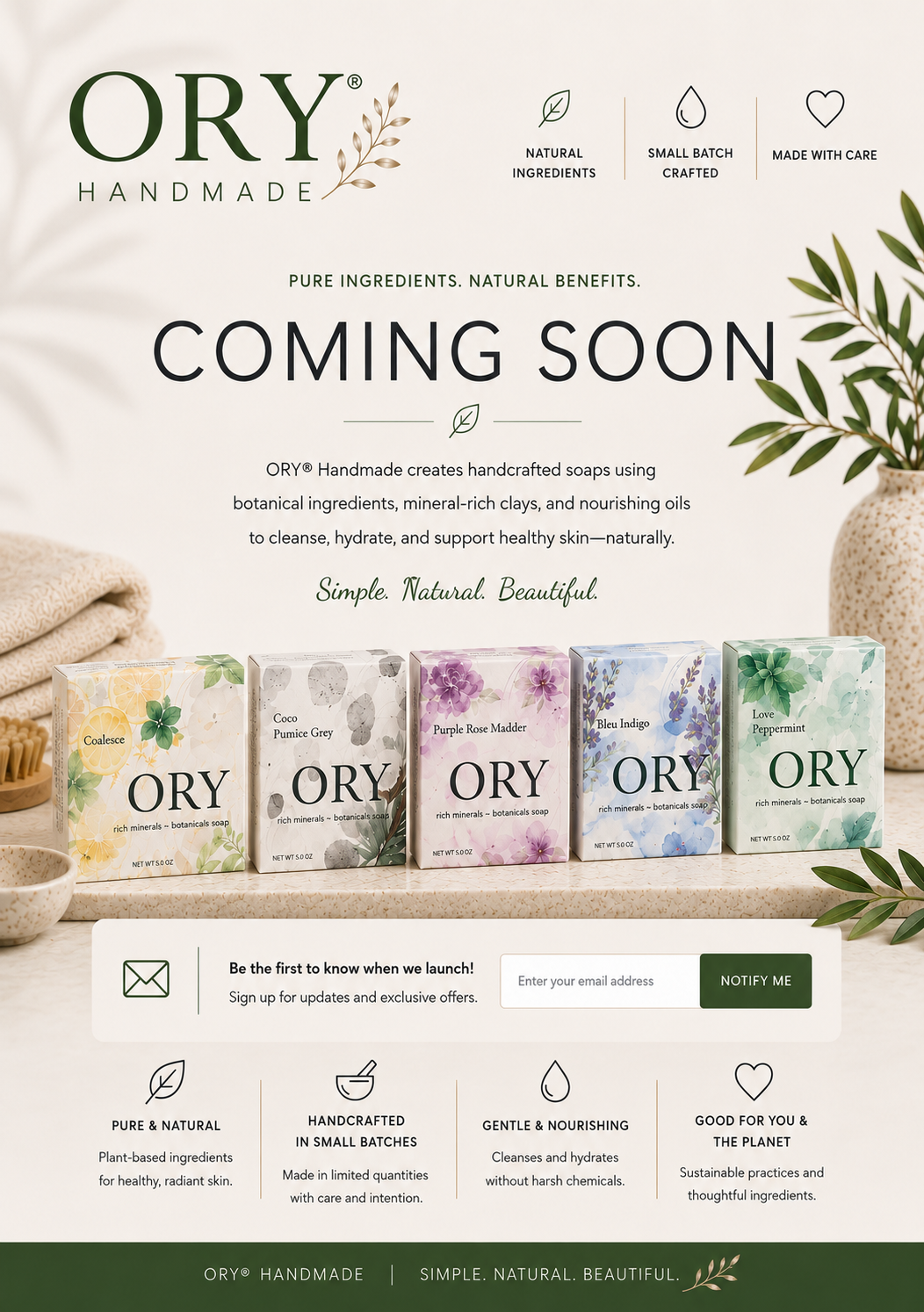

ORY® product lines:
☑ Skincare
☑ Haircare (shine, softness, moisture)
☑ Handmade Soap (silk peptides or tussah silk in lye water — classic “silk soap”)
☑ Cosmetics — full dual-use ingredient, animal-derived
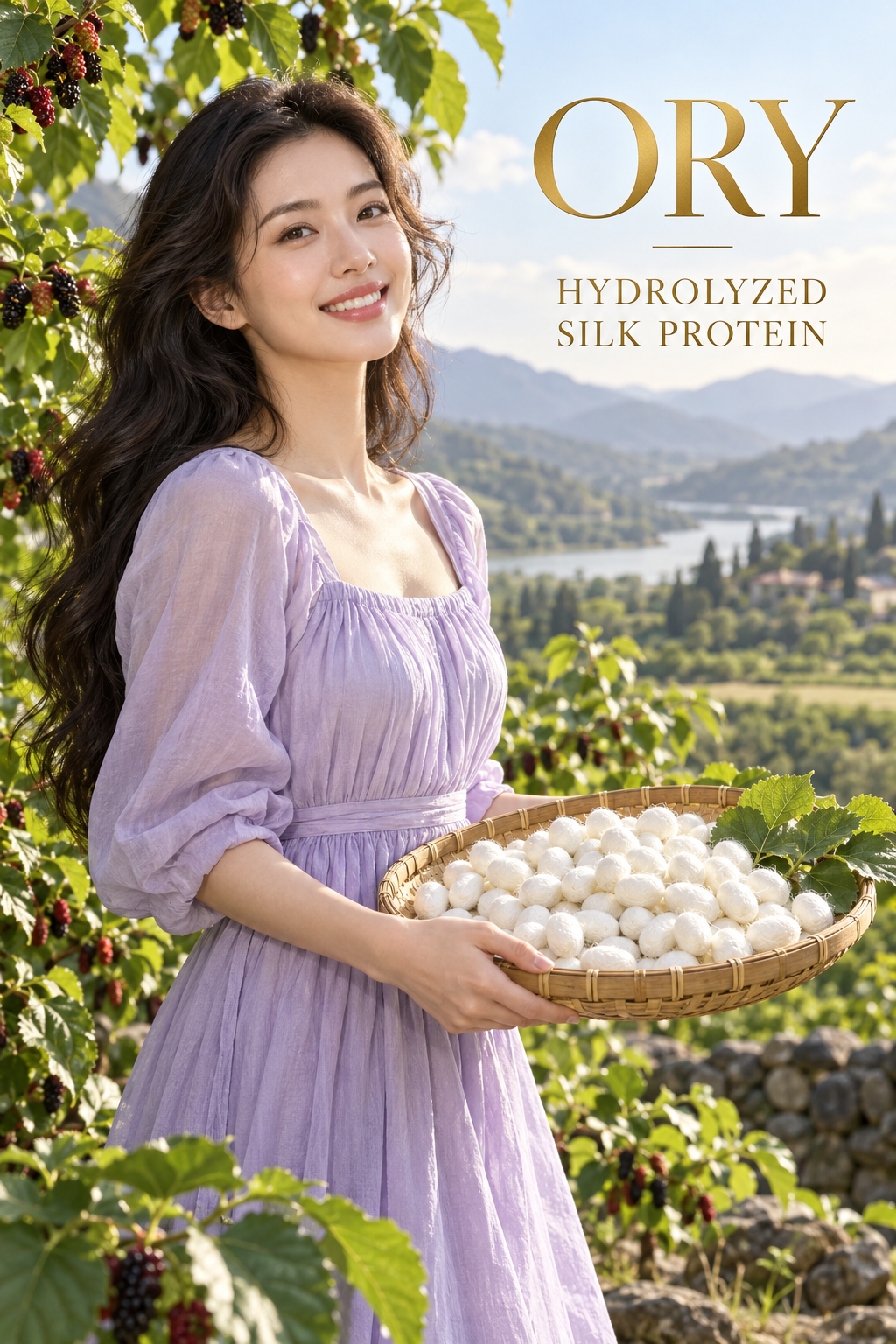
Hydrolyzed silk protein comes from the cocoon of the silkworm Bombyx mori, whose silk is built from two proteins: fibroin, the strong structural fiber, and sericin, the sticky, water-loving glue that coats it. Hydrolyzing them yields small, glycine- and serine-rich peptides with an exceptional affinity for water and for keratin — the reason silk protein leaves hair glossy, soft, and supple and skin smooth and hydrated. Sericin has clinical evidence as a moisturizer, increasing skin hydration and reducing water loss in an in vivo study [1], and stimulates collagen production in skin cells [3]; its broader biomedical and cosmetic properties (antioxidant, UV-absorbing, wound-supporting) are extensively reviewed [2]. Uniquely among proteins, silk is a handmade-soap classic: tussah silk fibers or silk peptides dissolved in the lye water give the prized “silk soap” slip. Silk is animal-derived; ORY® offers rice protein as the vegan alternative and can source peace (ahimsa) silk on request.
What is Hydrolyzed Silk Protein made of?
Hydrolyzed silk is produced by degumming cocoons (separating sericin), then acid or enzymatic hydrolysis of fibroin and/or sericin to defined peptide sizes. Points to know [1, 2]:
- Fibroin peptides: Glycine–alanine–serine-rich structural protein; film-forming, smoothing, strengthening.
- Sericin peptides: Serine-rich (up to 30% serine) hydrophilic protein; strong humectant, antioxidant, UV-absorbing, collagen-stimulating [1–3].
- Silk amino acids: Fully hydrolyzed (<500 Da) — deepest penetration, maximum hydration.
- Molecular weight grades: Amino acids to ~5,000 Da film-formers.
- Physical form: Clear-to-pale aqueous solution or powder; water-soluble; pH 4–7; add at cool-down; tussah silk fibers (raw) dissolve in hot lye water for soap.
- Typical use: 0.5–3% haircare; 0.5–2% skincare; 0.5–1% cosmetics; soap — a pinch of tussah silk per pound of oils or 0.5–1% peptides.
What skin type is best suited for Hydrolyzed Silk Protein?
Hydrolyzed silk suits all seven ORY® skin types as a hydrating, smoothing protein:
- Dry: Hydrolyzed silk forms a hydrating, moisture-binding film and supplies amino acids that support the natural moisturizing factor.
- Mature: Film-forming peptides give a tightening, smoothing feel; amino acids support the barrier.
- Sensitive: Sericin is well tolerated; rare silk allergy — patch test.
- Normal: Light hydration and a silky feel in serums and lotions.
- Combination and Oily: Oil-free film-forming hydration; low levels in gels and toners.
- Acne-prone: Non-comedogenic; keep levels low in leave-ons.
What hair type is best suited for Hydrolyzed Silk Protein?
Hydrolyzed silk gives hair its signature gloss, softness, and moisture:
- Dry or damaged: Serine-rich peptides bind water and smooth the cuticle; softness and shine.
- Curly and coily: Moisture-binding protein that softens rather than stiffens; excellent in leave-ins.
- Straight and wavy: Silky slip and gloss; light body.
- Color-treated or chemically processed: Smooths raised cuticles; reduces friction and breakage.
- Mature or thinning: Softness and manageability for fragile hair.
- Oily scalp: Rinse-off use on lengths.
- Sensitive scalp, dandruff-prone: Gentle protein; neutral for the scalp.
What are the benefits of Hydrolyzed Silk Protein?
Hydrolyzed silk’s benefits are supported by clinical and review literature [1–4]:
- Hydration: Sericin increased skin hydration and reduced water loss in vivo [1].
- Collagen support: Sericin stimulated collagen production in skin cells [3].
- Antioxidant and UV absorption: Sericin scavenges radicals and absorbs UV [2].
- Silky smoothness: Film-forming fibroin peptides smooth skin and hair.
- Hair gloss and softness: Keratin affinity plus water binding.
- Moisture retention in hair: Serine-rich peptides hold water in the fiber.
- Wound-supporting: Sericin promotes cell attachment and repair [2].
- Soap slip: Silk in lye water gives a smooth, luxurious lather feel.
Dual use across ORY® product lines
Hydrolyzed silk is the one protein that is a genuine four-line ingredient — including cold-process soap, where silk amino acids survive the lye.
| ORY® line | Dual use? | How it is used | Typical level |
|---|---|---|---|
|
ORY® Skincare |
Yes |
Hydrating serums, moisturizers, masks, eye creams, hand creams (sericin/silk amino acids). |
0.5–2% |
|
ORY® Haircare |
Yes |
Shine and softness conditioners, leave-ins, masks, shampoos, conditioner bars. |
0.5–3% |
|
ORY® Handmade Soap |
Yes |
Tussah silk fibers dissolved in hot lye water, or silk peptides/amino acids at trace, for the classic silk-soap slip and label. |
Pinch of tussah per lb; 0.5–1% peptides |
|
ORY® Cosmetics |
Yes |
Foundations and primers (silky film), mascaras (lash conditioning), lip products, setting sprays. |
0.5–1% |
Pros and cons of Hydrolyzed Silk Protein
Pros
Cons
- Clinical hydration evidence (sericin): [1].
- Unmatched softness and gloss: Hair and skin.
- Four-line including soap: Silk-soap tradition.
- Antioxidant, UV-absorbing, collagen-stimulating: [2, 3].
- Softens rather than stiffens: Protein-overload-friendly.
- Animal-derived: Silkworm; offer rice protein or peace silk.
- Cost: Premium protein.
- Rare silk allergy: Patch test; keep facial-cleanser levels low [4].
- Less structural repair than keratin: Softness over strength; combine for both.
- Preservation: Protein solutions need robust preservation.
What is the best application of Hydrolyzed Silk Protein?
Hydrolyzed silk is used for hydration, softness, and gloss:
- Hydrating serum: 1–2% silk amino acids with hyaluronic acid.
- Moisturizer or eye cream: 1%.
- Shine conditioner or leave-in: 1–2%.
- Hair mask: 2–3% with keratin (strength) and BTMS.
- Silk soap: Dissolve a pinch of tussah silk in hot lye water before adding to oils.
- Conditioner bar: 1–2%.
- Cosmetics: 0.5–1% in primer, foundation, or mascara.
Peer-reviewed references
- Padamwar MN, Pawar AP, Daithankar AV, Mahadik KR. Silk sericin as a moisturizer: an in vivo study. Journal of Cosmetic Dermatology. 2005;4(4):250–257.
- Kundu SC, Dash BC, Dash R, Kaplan DL. Natural protective glue protein, sericin bioengineered by silkworms: potential for biomedical and biotechnological applications. Progress in Polymer Science. 2008;33(10):998–1012.
- Aramwit P, Kanokpanont S, Nakpheng T, Srichana T. The effect of sericin from various extraction methods on cell viability and collagen production. International Journal of Molecular Sciences. 2010;11(5):2200–2211.
- Fukutomi Y, Itagaki Y, Taniguchi M, et al. Rhinoconjunctival sensitization to hydrolyzed wheat protein in facial soap can induce wheat-dependent exercise-induced anaphylaxis. Journal of Allergy and Clinical Immunology. 2011;127(2):531–533.
Disclaimer:
The information on this page is provided by ORY International, LC for educational purposes only. It summarizes published research about hydrolyzed silk protein as an ingredient, including laboratory and animal studies and clinical studies of formulas that may differ from ORY® products. Results from these studies may not apply to every person or to ORY® products. This page is not medical advice and does not replace advice from a dermatologist, physician, or other qualified healthcare provider.
ORY® Skincare, Haircare, Handmade Soap, and Cosmetics products are cosmetics. They are not intended to diagnose, treat, cure, mitigate, or prevent any disease or condition, including eczema, dermatitis, acne, dandruff, or any other condition. References to FDA or Cosmetic Ingredient Review (CIR) findings describe the ingredient, not ORY® products, and do not mean FDA has reviewed or approved any ORY® product.
Results vary by skin and scalp type, formulation, and use. Silk protein allergy is rare, but raw silk has caused allergy in people exposed to silk dust. Any cosmetic can cause irritation, sometimes from other ingredients. Always patch test, follow label directions, and stop use if irritation occurs. If you are pregnant, nursing, have a medical condition, or are buying for a child, consult a healthcare provider before use.
ORY International, LC works to keep this page accurate and current but makes no warranty as to its completeness. To the fullest extent permitted by law, ORY International, LC is not liable for any loss or injury arising from reliance on this information or from use of any product contrary to its label directions. To report a reaction, contact us at [insert contact email / phone].