

ORY® product lines:
☑ Skincare
☑ Haircare (works with cationic conditioners)
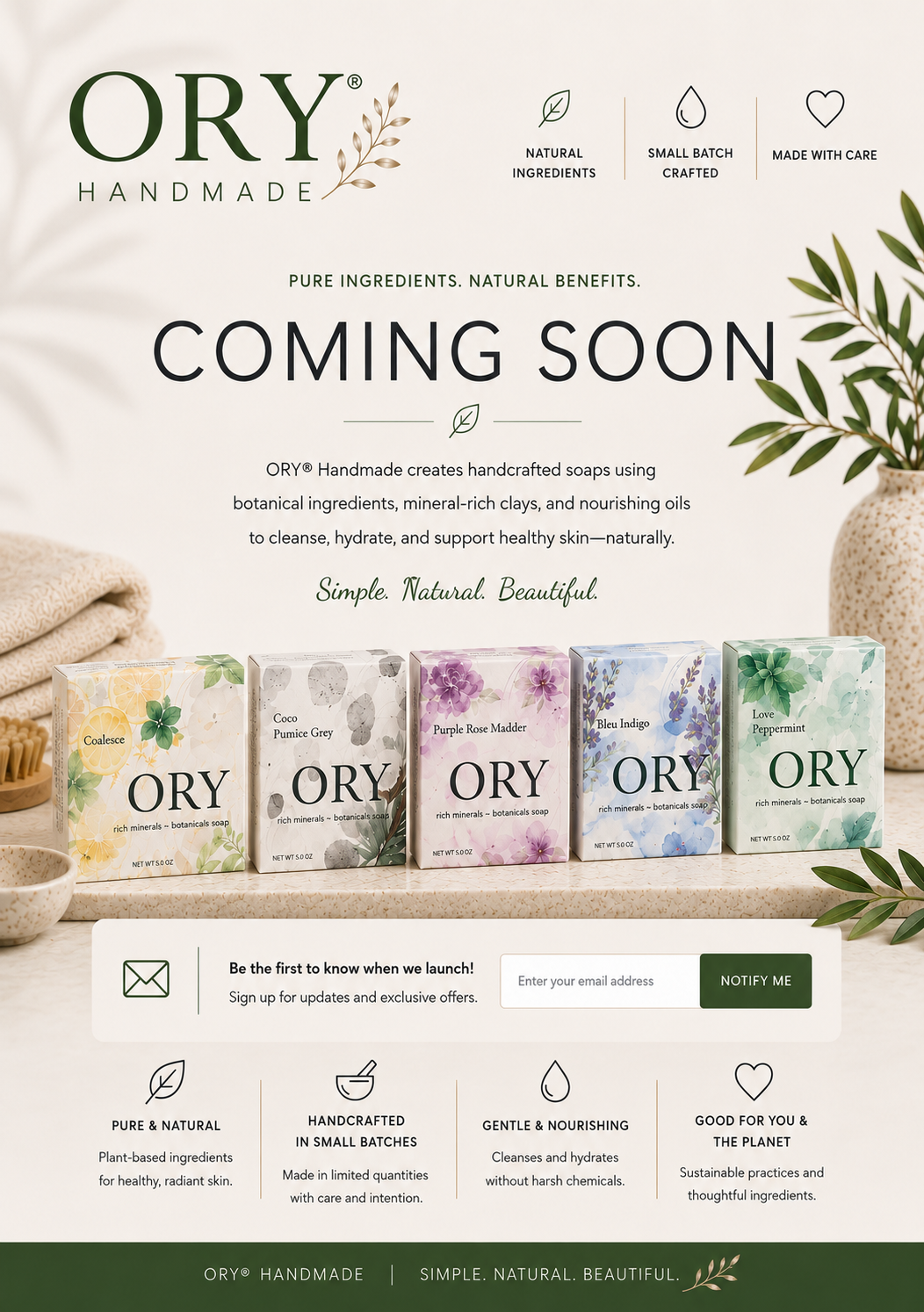
◐ Handmade Soap (liquid soap thickener; not cold-process bars)
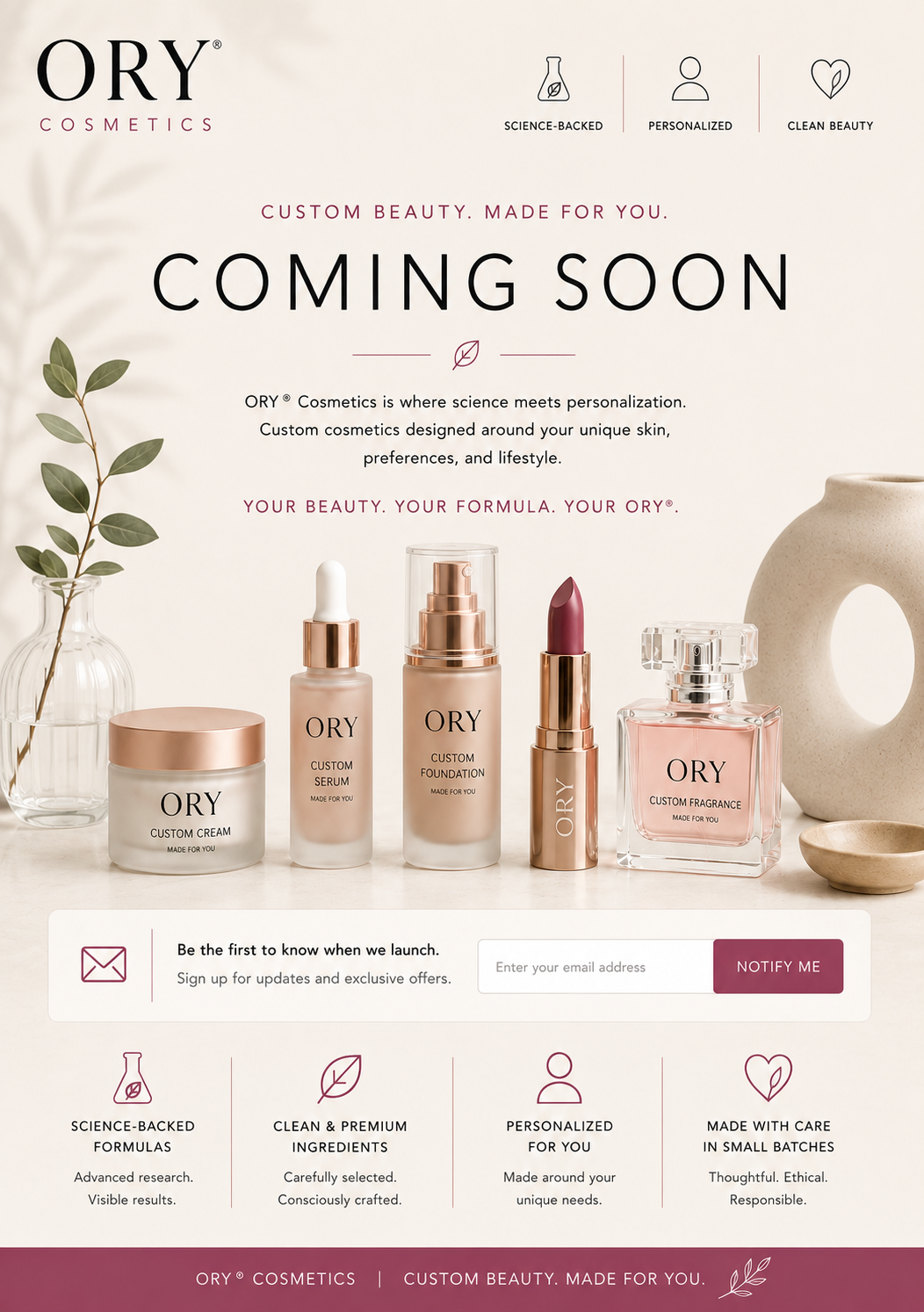
☑ Cosmetics — three-line functional ingredient
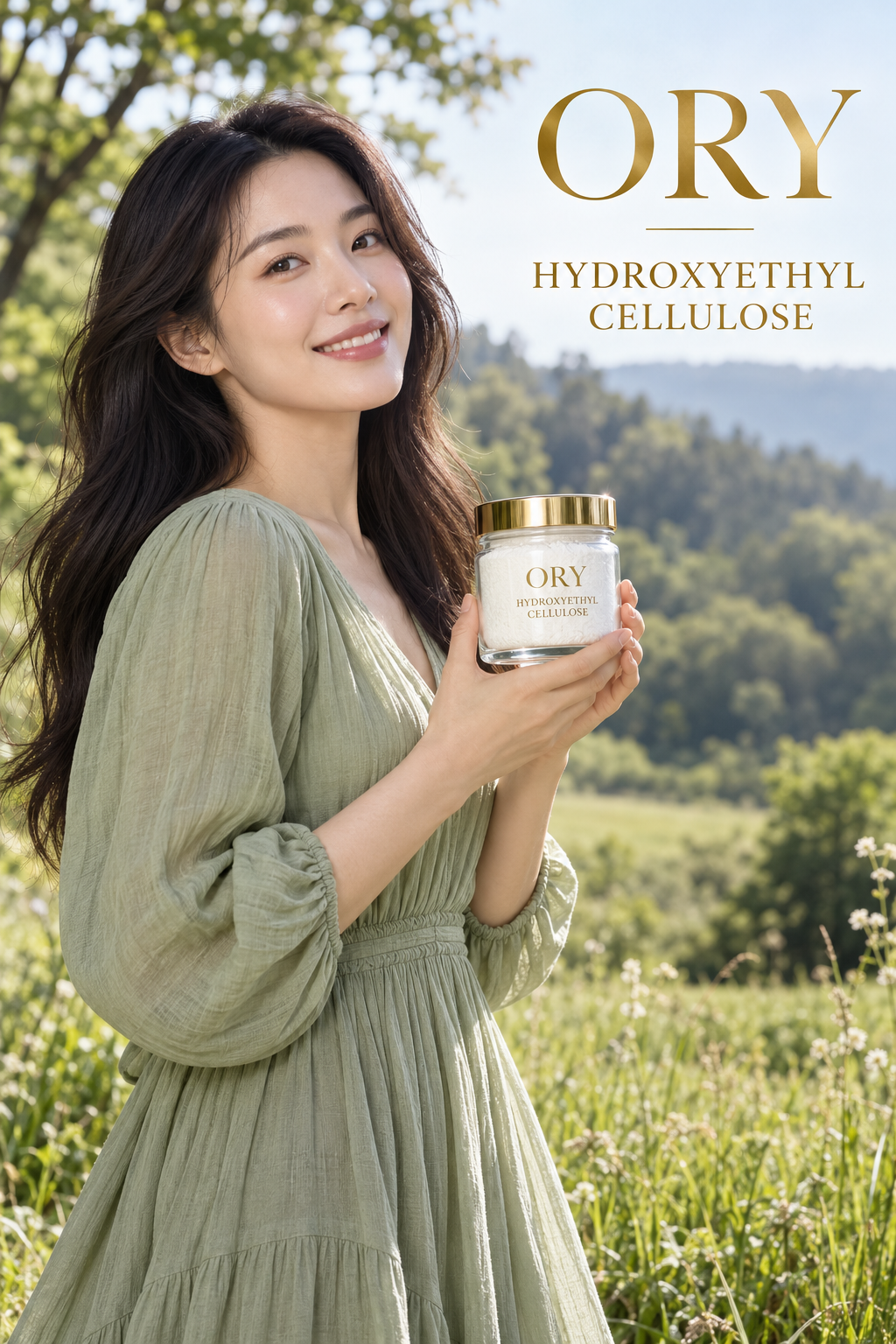
Hydroxyethylcellulose (HEC) is a water-soluble polymer made by modifying plant cellulose — the most abundant natural polymer on earth — with hydroxyethyl groups so that it dissolves in water and forms clear, smooth gels. It is a non-ionic thickener, which sets it apart from xanthan gum and carbomer: it tolerates salts, acids, and, crucially, positively charged conditioning agents such as BTMS and polyquaterniums, making it the thickener of choice for hair gels, conditioners, and 2-in-1 formulas. HEC gels are clear, non-tacky, and leave no residue, and the polymer is used in pharmaceutical gels and eye drops for the same reasons. The Cosmetic Ingredient Review Panel has concluded HEC and related cellulose ethers are safe as used [1]. Its one drawback is that it is a poor emulsion stabilizer and offers no skin-active benefit — it is texture, not treatment.
What is Hydroxyethylcellulose made of?
HEC is produced by treating purified wood or cotton cellulose with sodium hydroxide and then ethylene oxide, attaching hydroxyethyl groups that make the polymer water-soluble. Points to know [1, 2]:
- Non-ionic cellulose ether: White to off-white powder; dissolves in cold or hot water (hydration speeds with warmth); no charge — compatible with cationics, anionics, and electrolytes.
- Viscosity grades: From low (thin serums) to very high (thick gels); typical use 0.5–2%.
- Clear, pseudoplastic gels: Thin on application, recover afterward; non-tacky, non-stringy.
- Stable pH 2–12; heat-stable; freeze–thaw stable; degraded by cellulase enzymes (preserve well) and strong oxidizers.
- Plant-derived (wood pulp or cotton), biodegradable, vegan; residual ethylene oxide controlled by suppliers.
What skin type is best suited for Hydroxyethylcellulose?
HEC is a formulation-level ingredient suitable for all seven ORY® skin types:
- All skin types: Hydroxyethylcellulose is a formulation-level ingredient rather than a skin-type active; at use levels it is suitable for every ORY® skin type.
- Sensitive: Non-irritating and non-sensitizing at use levels; fragrance-free and inert.
- Oily and Acne-prone: Oil-free; non-comedogenic.
- Dry and Mature: Supports hydrating gels and creams.
- Combination and Normal: Everyday formulation base.
What hair type is best suited for Hydroxyethylcellulose?
HEC is the go-to thickener for haircare because it tolerates cationic conditioners:
- Curly and coily: Clear curl gels and custards with hold and definition; compatible with leave-in conditioners.
- Dry or damaged: Thickens BTMS conditioners and leave-ins without breaking the cationic system.
- Straight and wavy: Light styling gels and shine serums.
- Color-treated: Acid-tolerant; works in low-pH color-care formulas.
- Oily scalp: Non-greasy water gels and scalp tonics.
- Sensitive scalp, dandruff-prone, mature or thinning: Inert base for scalp serums and treatments with actives.
What are the benefits of Hydroxyethylcellulose?
HEC’s benefits are functional and well characterized [1, 2]:
- Clear, elegant gels: Transparent, smooth, non-tacky texture.
- Cationic compatibility: Thickens conditioners, curl creams, and 2-in-1s that xanthan or carbomer would break.
- Electrolyte and pH tolerance: Stable with salts, acids, and actives (pH 2–12).
- Film-forming hold: Light styling hold in hair gels; smoothing film on skin.
- Suspension: Suspends beads, botanicals, and pigments in gels.
- Stability: Heat- and freeze–thaw-stable.
- Pharmaceutical pedigree: Used in ophthalmic and topical drug gels [2].
- Plant-derived, biodegradable: Clean-label thickener.
Dual use across ORY® product lines
HEC thickens water-based products in three ORY® lines; cold-process bars need no thickener, but liquid soap does.
| ORY® line | Dual use? | How it is used | Typical level |
|---|---|---|---|
|
ORY® Skincare |
Yes |
Clear gels, gel-serums, aloe gels, toners with body, masks, aftershave gels; co-thickener in lotions. |
0.3–2% |
|
ORY® Haircare |
Yes |
Curl gels and custards, styling gels, thickener for conditioners/leave-ins (cationic-compatible), scalp serums. |
0.5–2% |
|
ORY® Handmade Soap |
Limited |
Thickens liquid soap and syndet washes; not used in cold-process bars. |
0.5–1.5% in liquid |
|
ORY® Cosmetics |
Yes |
Brow and lash gels, mascaras, gel liners, setting sprays (light), gel foundations. |
0.5–2% |
Pros and cons of Hydroxyethylcellulose
Pros
Cons
- Non-ionic — works with everything: The cationic-safe thickener.
- Crystal-clear, non-tacky: Premium gel feel.
- pH 2–12, electrolyte-tolerant: Robust.
- CIR-reviewed, plant-derived: [1].
- Affordable: Economical.
- Poor emulsion stabilizer: Use xanthan or carbomer for lotion stability.
- Slow, lumpy hydration: Disperse in glycerin or propanediol, or use surface-treated (delayed-hydration) grades.
- Enzyme-sensitive: Cellulase from contamination thins gels — preserve well.
- Can feel filmy at high %: Keep ≤2%.
- No active benefit: Texture only.
What is the best application of Hydroxyethylcellulose?
HEC is built into gel and conditioner bases:
- Clear gel-serum: 1% HEC dispersed in propanediol, hydrated in water; add actives at cool-down.
- Aloe or aftershave gel: 0.75–1%.
- Curl gel: 1.5–2% with glycerin and a film-former.
- Conditioner thickener: 0.3–0.5% with BTMS.
- Liquid soap: 0.5–1%.
- Cosmetics: 1–1.5% in brow gels.
Peer-reviewed references
- Elder RL (ed). Final report on the safety assessment of hydroxyethylcellulose, hydroxypropylcellulose, methylcellulose, hydroxypropyl methylcellulose, and cellulose gum. Journal of the American College of Toxicology. 1986;5(3):1–59.
- Shokri J, Adibkia K. Application of cellulose and cellulose derivatives in pharmaceutical industries. In: van de Ven T, Godbout L, eds. Cellulose – Medical, Pharmaceutical and Electronic Applications. IntechOpen; 2013:47–66.
- Lundov MD, Moesby L, Zachariae C, Johansen JD. Contamination versus preservation of cosmetics: a review on legislation, usage, infections, and contact allergy. Contact Dermatitis. 2009;60(2):70–78.
Disclaimer:
The information on this page is provided by ORY International, LC for educational purposes only. It summarizes published research about hydroxyethylcellulose (HEC) as an ingredient, including laboratory and animal studies and clinical studies of formulas that may differ from ORY® products. Results from these studies may not apply to every person or to ORY® products. This page is not medical advice and does not replace advice from a dermatologist, physician, or other qualified healthcare provider.
ORY® Skincare, Haircare, Handmade Soap, and Cosmetics products are cosmetics. They are not intended to diagnose, treat, cure, mitigate, or prevent any disease or condition, including eczema, dermatitis, acne, dandruff, or any other condition. References to FDA or Cosmetic Ingredient Review (CIR) findings describe the ingredient, not ORY® products, and do not mean FDA has reviewed or approved any ORY® product.
Results vary by skin and scalp type, formulation, and use. This ingredient is rarely irritating, and any cosmetic can cause irritation, sometimes from other ingredients. Always patch test, follow label directions, and stop use if irritation occurs. If you are pregnant, nursing, have a medical condition, or are buying for a child, consult a healthcare provider before use.
ORY International, LC works to keep this page accurate and current but makes no warranty as to its completeness. To the fullest extent permitted by law, ORY International, LC is not liable for any loss or injury arising from reliance on this information or from use of any product contrary to its label directions. To report a reaction, contact us at [insert contact email / phone].